About a month ago, my computer keyboard began acting up. The right half of the screen became intermittent, but some keys were worse than others. The delete key, the "l" key, the return key and the space bar were especially erratic. Apple has an alternative "built in" keyboard that you can use the touch pad that I was able to use as a workaround. But that really slowed down my typing. We put it in the shop before the New York trip, but a simple keyboard replacement did not cure the problem. I did all my work, keywording my images that are at Acclaim with this faulty keyboard setup. Even instant messaging.
When we got home from this last trip, we got my computer back into the shop. Even though Henry rigged me up a substitute computer with a mac mini, an additional hard drive, big keyboard and my new large monitor, it just was not the same. The larger more traditional keyboard did not have the same feel as my laptop. Trying to use the mouse to clone out the dust spots on images did not work very well. Picture me moving the mouse on my leg in front of the desk, keyboard in my lap. And it was not a one hand project to clone either. Left hand had to be on the keyboard (option key) while the right hand was trying to get the cursor positioned. Not ideal, not at all.
Whether this is good or bad, I can't tell, but I spend a lot of time at my computer every day. I get the news from MyYahoo. I check several photo discussion boards to learn new things and to keep up with my online photography friends. I also use instant messaging. I do my blog and I read several other blogs. Plus I work on my photos. And let's don't forget email. Not only do I get email from friends and family, I'm now on three list serves that send email all day long. But it is fun email. Texbirds tells me where I could go to sight birds (actually had me wanting to be back in Texas during this fall migration!). The stock photography emails give me information about the stock photography world (as well as the politics of it-arghhh!). And, of course, when one is bored, there is always "Solitaire til Dawn." With my laptop, I can be in my office, in the living room, or at Starbucks. With the substitute, I was stuck in my office.
Today MY computer came back. Henry had "cloned" it so that I did have a computer. They pretty much replaced everything but the external case this time, so Henry had to take everything we had backed up and reload it to my repaired computer.(Thank you God that we HAD backed everything up!)
It may be silly to miss something as mundane as a computer, but I did miss my laptop. I'm glad it is back home.


Thursday, October 26, 2006


My computer
About a month ago, my computer keyboard began acting up. The right half of the screen became intermittent, but some keys were worse than others. The delete key, the "l" key, the return key and the space bar were especially erratic. Apple has an alternative "built in" keyboard that you can use the touch pad that I was able to use as a workaround. But that really slowed down my typing. We put it in the shop before the New York trip, but a simple keyboard replacement did not cure the problem. I did all my work, keywording my images that are at Acclaim with this faulty keyboard setup. Even instant messaging.
When we got home from this last trip, we got my computer back into the shop. Even though Henry rigged me up a substitute computer with a mac mini, an additional hard drive, big keyboard and my new large monitor, it just was not the same. The larger more traditional keyboard did not have the same feel as my laptop. Trying to use the mouse to clone out the dust spots on images did not work very well (picture me moving the mouse on my leg in front of the desk, keyboard in my lap. And it was not a one hand project to clone either. Left hand had to be on the keyboard (option key) while the right hand was trying to get the cursor positioned. Not ideal, not at all.
Whether this is good or bad, I can't tell, but I spend a lot of time at my computer every day. I get the news from MyYahoo. I check several photo discussion boards to learn new things and to keep up with my online photography friends. I do my blog and I read several other blogs. Plus I work on my photos. And let's don't forget email. Not only do I get email from friends and family, I'm now on three list serves that send email all day long. But it is fun email. Texbirds tells me where I could go to sight birds (actually had me wanting to be back in Texas during this fall migration!). The stock photography emails give me information about the stock photography world (as well as the politics of it-arghhh!). And, of course, when one is bored, there is always "Solitaire til Dawn." With my laptop, I can be in my office, in the living room, or at Starbucks. With the substitute, I was stuck in my office.
Today MY computer came back. Henry had "cloned" it so that I did have a computer. They pretty much replaced everything but the external case this time, so Henry had to take everything we had backed up and reload it to my repaired computer.(Thank you God that we HAD backed everything up!)
It may be silly to miss something as mundane as a computer, but I did miss my laptop. I'm glad it is back home.
When we got home from this last trip, we got my computer back into the shop. Even though Henry rigged me up a substitute computer with a mac mini, an additional hard drive, big keyboard and my new large monitor, it just was not the same. The larger more traditional keyboard did not have the same feel as my laptop. Trying to use the mouse to clone out the dust spots on images did not work very well (picture me moving the mouse on my leg in front of the desk, keyboard in my lap. And it was not a one hand project to clone either. Left hand had to be on the keyboard (option key) while the right hand was trying to get the cursor positioned. Not ideal, not at all.
Whether this is good or bad, I can't tell, but I spend a lot of time at my computer every day. I get the news from MyYahoo. I check several photo discussion boards to learn new things and to keep up with my online photography friends. I do my blog and I read several other blogs. Plus I work on my photos. And let's don't forget email. Not only do I get email from friends and family, I'm now on three list serves that send email all day long. But it is fun email. Texbirds tells me where I could go to sight birds (actually had me wanting to be back in Texas during this fall migration!). The stock photography emails give me information about the stock photography world (as well as the politics of it-arghhh!). And, of course, when one is bored, there is always "Solitaire til Dawn." With my laptop, I can be in my office, in the living room, or at Starbucks. With the substitute, I was stuck in my office.
Today MY computer came back. Henry had "cloned" it so that I did have a computer. They pretty much replaced everything but the external case this time, so Henry had to take everything we had backed up and reload it to my repaired computer.(Thank you God that we HAD backed everything up!)
It may be silly to miss something as mundane as a computer, but I did miss my laptop. I'm glad it is back home.
Computer Cable Chaos
Now that we are back home, (briefly), I need to get my hard drives set back up on my desk. I've been unconsciously avoiding this task.
Why? You innocently ask.
I have 6 hard drives. Each hard drive has a power cable that comes in two parts. You must match both pieces not only to each other but also to the appropriate hard drive. That's 12 pieces of cable. Some hard drives it is easy to see which cable goes with which drive. But two different brands have slightly different stem length and identical power converter boxes on the cables. Each piece actually fits into each brand hard drive, but one size looks like it fits better than the other one. Does it matter if I don't get exactly the right one in????? Perhaps it does, perhaps it does not. Remind me some day to look at the power numbers, watts, etc. But we're not done counting cables yet.
We've got 12 power cables. Now we've got to connect these hard drives to the computer. Each hard driive must have at least one cable - now we're up to 18 pieces of cable. The computer really only has one place to plug the cable into, so each hard drive must connect to another hard drive or a multi plug device. The multiplug thing is new. The old system required each drive to "piggy back" to the matching one and then over to the next pair. So now we're up to 24 pieces of wire. The computer must attach to a printer, add another pice of wire.
I've added an external monitor that also has to connect. We're up to 26 pieces of wire cable. The new firewire multiplug came in two pieces-a box and a power cord.
My normal laptop is in the shop. Henry has rigged me up a temporary computer set up. Add another computer box, another hard drive - MORE wires. Add at least 6 more cables. Now we've got 33 pieces of wire. The longest lines are several feet, the shortest one less than a foot.
Are you getting the picture of a desk top filled with cables??????? And of course you've got to have power strips, multiple power strips to power all this stuff.
Now, let's add to the confusion. I have a talent . . . . a real talent . . . . what is this talent you may ask. Give me a wire, any wire, organized wire or not organized wire, it does not matter. After it has been in my hands for any length of time, it will join forces with any other wires around to create endless knots. So now, . . . . . 33 pieces of wire, all near each other . . . .
Ok, let's think about the other power things in the office, shredder, TV, pencil sharpener, extra printer. It is a feng shui nightmare.
Can you guess? I don't like cables!
Why? You innocently ask.
I have 6 hard drives. Each hard drive has a power cable that comes in two parts. You must match both pieces not only to each other but also to the appropriate hard drive. That's 12 pieces of cable. Some hard drives it is easy to see which cable goes with which drive. But two different brands have slightly different stem length and identical power converter boxes on the cables. Each piece actually fits into each brand hard drive, but one size looks like it fits better than the other one. Does it matter if I don't get exactly the right one in????? Perhaps it does, perhaps it does not. Remind me some day to look at the power numbers, watts, etc. But we're not done counting cables yet.
We've got 12 power cables. Now we've got to connect these hard drives to the computer. Each hard driive must have at least one cable - now we're up to 18 pieces of cable. The computer really only has one place to plug the cable into, so each hard drive must connect to another hard drive or a multi plug device. The multiplug thing is new. The old system required each drive to "piggy back" to the matching one and then over to the next pair. So now we're up to 24 pieces of wire. The computer must attach to a printer, add another pice of wire.
I've added an external monitor that also has to connect. We're up to 26 pieces of wire cable. The new firewire multiplug came in two pieces-a box and a power cord.
My normal laptop is in the shop. Henry has rigged me up a temporary computer set up. Add another computer box, another hard drive - MORE wires. Add at least 6 more cables. Now we've got 33 pieces of wire. The longest lines are several feet, the shortest one less than a foot.
Are you getting the picture of a desk top filled with cables??????? And of course you've got to have power strips, multiple power strips to power all this stuff.
Now, let's add to the confusion. I have a talent . . . . a real talent . . . . what is this talent you may ask. Give me a wire, any wire, organized wire or not organized wire, it does not matter. After it has been in my hands for any length of time, it will join forces with any other wires around to create endless knots. So now, . . . . . 33 pieces of wire, all near each other . . . .
Ok, let's think about the other power things in the office, shredder, TV, pencil sharpener, extra printer. It is a feng shui nightmare.
Can you guess? I don't like cables!
Music Mysteries
Music plays a big part in human culture. I've been involved in music all of my life. As a small child it was singing Bible school songs. I learned to play the violin, viola and oboe as I went through school. While I was placed as an alto in the school chorus in elementary school (it was based upon your grade, not your vocal range if I remember correctly), I really did not learn to sing alto until junior high. I originally learned alto by moving to the alto line when the soprano and alto shared a note.
For the last 15 or so years, I've been singing on Wednesday with our church's chorus. I am amazed at how many ways people learn to sing. Back in my elementary school years I went to a song workshop at one of the area churches. One of the sessions was learning to sing with shaped notes. Each shape represents a different part of a scale.

For more information about this system and its history (and it has been around since 1847) check out James Tackett's page. While I went to that class, it did not "take", I don't use the shapes. I can tell you which note (the name -C, B flat, etc), but that is also not how my mind converts the notes on paper into the music that comes from my lips.
Even though I read music, I have been discovering that each of us has a unique approach to how we sing. I've known a long time that it is easier for me to sing my alto part when the sopranos are singing along. I seem to sing "relationally." Somehow, instinctively, I know where my note fits in with the rest of the chord. Likewise, even though each song is written in a different key, without conscious thought, I automatically read the music and don't have to think about whether this shoud be a C natural or a C sharp. I don't know how I do it, it just happens. I'm always surprised when I talk to a strong singer (especially one who sings a part besides soprano) who does not read music. The melody is easy to learn - our minds just do it. Parts are harder. And while some harmony just follows the melody a couple of steps down, other harmonies do not. So when I hear someone next to me "sightread" a new piece of music accurately without being able to read music, I am impressed. Some people need to hear someone else sing their part before it becomes natural. Some people find it easier to learn their part after they've heard the soprano or melody. I find it fascinating how each person's brain works differently to produce the same music.
Most of the time I can sight read new music, but I do it better when all the other parts are singing, because some part of my brain "knows" where my note should be in relation to the other notes. It is not conscious. While I can sightread a part by myself, it is often harder. There are times though that this automatic sense of where my note should be vanishes into thin air. Usually it is when a composer throws in some naturals and sharps that create a strange chord. Sometimes it is during a key change in the middle of a song. And sometimes when this happens, it becomes much more difficult to learn those measures of music in a song.
This happened at chorus last night. We are learning new music for the annual Christmas program. Since I"ve been out of town, they had already been working on the song. I was sight reading. It went well until the key change. It was a song written in a key with 5 flats (yes, my music theory should help me know which key that is . . . . but remember, there is that mystery, I just sing it, I don't have to know the key to be able to make the music) . The trouble started with a low B that was flat in the key signature, but was made a natural as part of a coming key change. The next two notes were also changed to lead into the new key. My brain just could not figure it out. I could not "hear" it. It took a number of times with Dan playing the notes on the keyboard and then another few times trying to sing it with the sopranos, another couple of times with the keyboard. Ahhhhh, finally it worked with the rest of the parts.
We worked on another song last night. I remember it well from some years back. The men start, and the women come in. The first time we sang this, Dan would try to give the altos their note. But for reasons I can't explain, I could never hold onto the pitch while the men sang their three notes. I spent a lot of time that year with my keyboard at home singing the men's entrance and placing my notes in relation to those. And the night of the performance, I was still worried. That year, Cindy Dodsen had the note nailed - if I stood next to her I could either get it, or at least get the next notes and then make it on into the song. She's not here this year. As we were having problems getting the note last night, I mentioned that the only way I "got it" last time was to find it as part of the run with the men's part. That may have helped some other altos this year. We'll see. It is a great song, if you can get through the first few measures and the ending which repeats the beginning.
I need to bring home a copy of the music to practice, because I worry that my brain may not remember that funny key change next week. Because of our travel schedule, I won't get to practice as many times. But hopefully, by the time of the program, I'll have it down.
For the last 15 or so years, I've been singing on Wednesday with our church's chorus. I am amazed at how many ways people learn to sing. Back in my elementary school years I went to a song workshop at one of the area churches. One of the sessions was learning to sing with shaped notes. Each shape represents a different part of a scale.
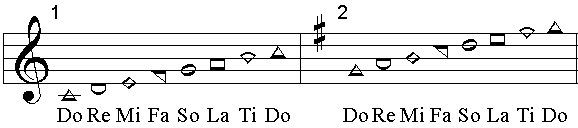
For more information about this system and its history (and it has been around since 1847) check out James Tackett's page. While I went to that class, it did not "take", I don't use the shapes. I can tell you which note (the name -C, B flat, etc), but that is also not how my mind converts the notes on paper into the music that comes from my lips.
Even though I read music, I have been discovering that each of us has a unique approach to how we sing. I've known a long time that it is easier for me to sing my alto part when the sopranos are singing along. I seem to sing "relationally." Somehow, instinctively, I know where my note fits in with the rest of the chord. Likewise, even though each song is written in a different key, without conscious thought, I automatically read the music and don't have to think about whether this shoud be a C natural or a C sharp. I don't know how I do it, it just happens. I'm always surprised when I talk to a strong singer (especially one who sings a part besides soprano) who does not read music. The melody is easy to learn - our minds just do it. Parts are harder. And while some harmony just follows the melody a couple of steps down, other harmonies do not. So when I hear someone next to me "sightread" a new piece of music accurately without being able to read music, I am impressed. Some people need to hear someone else sing their part before it becomes natural. Some people find it easier to learn their part after they've heard the soprano or melody. I find it fascinating how each person's brain works differently to produce the same music.
Most of the time I can sight read new music, but I do it better when all the other parts are singing, because some part of my brain "knows" where my note should be in relation to the other notes. It is not conscious. While I can sightread a part by myself, it is often harder. There are times though that this automatic sense of where my note should be vanishes into thin air. Usually it is when a composer throws in some naturals and sharps that create a strange chord. Sometimes it is during a key change in the middle of a song. And sometimes when this happens, it becomes much more difficult to learn those measures of music in a song.
This happened at chorus last night. We are learning new music for the annual Christmas program. Since I"ve been out of town, they had already been working on the song. I was sight reading. It went well until the key change. It was a song written in a key with 5 flats (yes, my music theory should help me know which key that is . . . . but remember, there is that mystery, I just sing it, I don't have to know the key to be able to make the music) . The trouble started with a low B that was flat in the key signature, but was made a natural as part of a coming key change. The next two notes were also changed to lead into the new key. My brain just could not figure it out. I could not "hear" it. It took a number of times with Dan playing the notes on the keyboard and then another few times trying to sing it with the sopranos, another couple of times with the keyboard. Ahhhhh, finally it worked with the rest of the parts.
We worked on another song last night. I remember it well from some years back. The men start, and the women come in. The first time we sang this, Dan would try to give the altos their note. But for reasons I can't explain, I could never hold onto the pitch while the men sang their three notes. I spent a lot of time that year with my keyboard at home singing the men's entrance and placing my notes in relation to those. And the night of the performance, I was still worried. That year, Cindy Dodsen had the note nailed - if I stood next to her I could either get it, or at least get the next notes and then make it on into the song. She's not here this year. As we were having problems getting the note last night, I mentioned that the only way I "got it" last time was to find it as part of the run with the men's part. That may have helped some other altos this year. We'll see. It is a great song, if you can get through the first few measures and the ending which repeats the beginning.
I need to bring home a copy of the music to practice, because I worry that my brain may not remember that funny key change next week. Because of our travel schedule, I won't get to practice as many times. But hopefully, by the time of the program, I'll have it down.
Tuesday, October 24, 2006
Living with Cancer
One of my very good friends has been fighting cancer now for 3 1/2 years. Two surgeries, two rounds of chemo, regulary testing, life with cancer has many realities. New labels - cancer patient. At first you think that label is temporary. And for some it is, you have been a cancer patient and you become a cancer survivor. But being a cancer patient moves you into a whole different realm of reality. Reality is regular doctor visits, sitting under big intimidating equipment, having toxins poured into your system to "kill" part of your body. My friend has been lucky, major pain has not been one of her symptoms. But most of the cancer treatments have "side effects." Nausea, hair loss, physical deterioration, and added stress on the body to fight off those cancerous cells. And once you've been through chemo, knowing that you have to do it again, it is no longer an unknown quantity, you KNOW what discomfort is coming next.
There is a group of women who meet regularly to pray for my friend. It has been a privilege to me to be part of this group. While I do not know what the end of this story will be, I DO know that God is faithful. Our time together is spent both in a special fellowship with her - sharing our lives with her and in a time of intense prayer. Each one of us adds something unique to the prayer. We pray for her physical strength, we pray for miraculous healing, we pray for emotional support, we pray for the doctors. I doubt that there is any aspect of dealing with cancer that we have not brought before God on her behalf.
And we know that God has answered some of our prayers. Two years ago we almost lost her - complications from the second surgery, lung problems, she was very weak, frail, and even the doctors thought they were going to lose her. But through God's intervention, she not only survived but has thrived these last two years, regaining the strength she lost from a long hospital stay. She has been active, vigorous, and joyful these past two years. She has acknowledged how God has cared for her and guided her. She has been a continuous witness for him. She has inspired all of us.
I have had an almost liturgical prayer for my friend. Her mom laughed when I told her about it, commenting on how I had her life all planned out. I would ask you to join me in this prayer for my friend: Father, I ask complete healing for my friend. Father, I ask that she live to see her childen married, her grandchildren, her great grandchildren. I ask that she have a long and healthy life and that she die of old age in her own bed.
There is a group of women who meet regularly to pray for my friend. It has been a privilege to me to be part of this group. While I do not know what the end of this story will be, I DO know that God is faithful. Our time together is spent both in a special fellowship with her - sharing our lives with her and in a time of intense prayer. Each one of us adds something unique to the prayer. We pray for her physical strength, we pray for miraculous healing, we pray for emotional support, we pray for the doctors. I doubt that there is any aspect of dealing with cancer that we have not brought before God on her behalf.
And we know that God has answered some of our prayers. Two years ago we almost lost her - complications from the second surgery, lung problems, she was very weak, frail, and even the doctors thought they were going to lose her. But through God's intervention, she not only survived but has thrived these last two years, regaining the strength she lost from a long hospital stay. She has been active, vigorous, and joyful these past two years. She has acknowledged how God has cared for her and guided her. She has been a continuous witness for him. She has inspired all of us.
I have had an almost liturgical prayer for my friend. Her mom laughed when I told her about it, commenting on how I had her life all planned out. I would ask you to join me in this prayer for my friend: Father, I ask complete healing for my friend. Father, I ask that she live to see her childen married, her grandchildren, her great grandchildren. I ask that she have a long and healthy life and that she die of old age in her own bed.
Monday, October 23, 2006
Boundaries
This is my first full day at home. I made my breakfast and went out to sit on my porch to eat, watch birds, and do my "quiet" time. Our neighbors have around 5 dogs, 4 of them are great pyrenees, 2 of these are "puppies." These dogs are such escape artists that they spend a lot of time outside their own yard. They've been known to bark at me when I am feeding our horse on the opposite side of the property from them. Pyrenees are flock guard dogs - their job is to protect the livestock of their owners.
Because we've been gone, they've added my front pasture to their "territory." Perhaps my whole yard. They were in the middle of the pasture, challenging me for sitting on my own porch. I continued eating hoping they would get tired and go home. I finished breakfast to the music of constant barking. I finally stood up off the porch and used my stern, angry voice and told the alpha dog to go home. When we've been home awhile that is usually enough to get them to go on back home. But we've been gone and the barking continued. We have a new collection of birds, the migrants. I was listening to a mockingbird. I realized that the mockingbird and the alpha dog seemed to be having a "shouting" match. The dog barked, the mocking bird answered, bird, dog, bird, dog. While I tried to find my morning serenity, this was not working.
I got mad. I went to the fence line, challenging the dog. Nope, dog continued holding her ground and barking. Not to be detered from having peace in my own yard, I decided which pasture entry I would use. As I entered the side pasture, I decided to be sure I had some protection in case the coming confrontation got ugly. I picked up a small fireplace log, one heavy enough to deter a dog attack should one happen. When I finally entered the big pasture where the 4 dogs were, they finally realized that I did mean business. While I was worried that I was coming up on the wrong side to herd them back to their side, I need not have worred, they made haste to the opening where they usually come and go from my property, up by the road. They continued running up the road, passing their own yard. I had about 20 minutes of quiet. They chose to return. Henry chased them off once, and I chased them off again. The last time, the alpha dog continued to bark at me from the relative safety of the road in front of their property behind a line of trees.
We've all heard about how good fences make good neighbors. I had to lay a boundary with these dogs this morning.I had to let them know that I was higher in the pecking order than they and that they must heed me. It looks like I will be doing that for awhile until they decide they can't hold my yard as theirs. Had I gone out there with a soft voice, saying, "please go home." I don't think they would have left. But I went out with a strong pace and presence, no nonsense approach. The final barking from behind the line of trees was also a challenge from the alpha. I probably should have gone over to the road and pursued, but that was a long walk, and they were out of my territory.
Sometimes when we deal with people, we have to set boundaries. And we usually have to be angry before we set them.
Many times we fear setting a boundary, fearing we may lose a friendship or cause hard feelings. But boundaries are a necessary part of life. Unconsciously we set boundaries as to what we are willing to do, or what we are willing to accept from someone else. Sometimes we have loose boundaries. Loose boundaries help us make new friends easily. But loose boundaries can also make us easy prey for those people who like to take advantage of people. Boundaries that are too strong can make people leary of becoming our friend.
Life is full of conflicts, some minor, some major. We need boundaries as we deal with people. Not setting the boundaries can cause resentment. I'm not always good with boundaries. I need to talk to my neigbhor again about their dogs. I don't dislike the dogs, but in the country when you get 4 or 5 dogs running together, they become a pack. It changes their behavior.
I don't see a happy ending to this story for many reasons.
To read more about human boundaries, Boundaries: When to say Yes, when to Say No, To take control of your life by Dr. Henry Cloud and Dr. John Townsend.
Because we've been gone, they've added my front pasture to their "territory." Perhaps my whole yard. They were in the middle of the pasture, challenging me for sitting on my own porch. I continued eating hoping they would get tired and go home. I finished breakfast to the music of constant barking. I finally stood up off the porch and used my stern, angry voice and told the alpha dog to go home. When we've been home awhile that is usually enough to get them to go on back home. But we've been gone and the barking continued. We have a new collection of birds, the migrants. I was listening to a mockingbird. I realized that the mockingbird and the alpha dog seemed to be having a "shouting" match. The dog barked, the mocking bird answered, bird, dog, bird, dog. While I tried to find my morning serenity, this was not working.
I got mad. I went to the fence line, challenging the dog. Nope, dog continued holding her ground and barking. Not to be detered from having peace in my own yard, I decided which pasture entry I would use. As I entered the side pasture, I decided to be sure I had some protection in case the coming confrontation got ugly. I picked up a small fireplace log, one heavy enough to deter a dog attack should one happen. When I finally entered the big pasture where the 4 dogs were, they finally realized that I did mean business. While I was worried that I was coming up on the wrong side to herd them back to their side, I need not have worred, they made haste to the opening where they usually come and go from my property, up by the road. They continued running up the road, passing their own yard. I had about 20 minutes of quiet. They chose to return. Henry chased them off once, and I chased them off again. The last time, the alpha dog continued to bark at me from the relative safety of the road in front of their property behind a line of trees.
We've all heard about how good fences make good neighbors. I had to lay a boundary with these dogs this morning.I had to let them know that I was higher in the pecking order than they and that they must heed me. It looks like I will be doing that for awhile until they decide they can't hold my yard as theirs. Had I gone out there with a soft voice, saying, "please go home." I don't think they would have left. But I went out with a strong pace and presence, no nonsense approach. The final barking from behind the line of trees was also a challenge from the alpha. I probably should have gone over to the road and pursued, but that was a long walk, and they were out of my territory.
Sometimes when we deal with people, we have to set boundaries. And we usually have to be angry before we set them.
Many times we fear setting a boundary, fearing we may lose a friendship or cause hard feelings. But boundaries are a necessary part of life. Unconsciously we set boundaries as to what we are willing to do, or what we are willing to accept from someone else. Sometimes we have loose boundaries. Loose boundaries help us make new friends easily. But loose boundaries can also make us easy prey for those people who like to take advantage of people. Boundaries that are too strong can make people leary of becoming our friend.
Life is full of conflicts, some minor, some major. We need boundaries as we deal with people. Not setting the boundaries can cause resentment. I'm not always good with boundaries. I need to talk to my neigbhor again about their dogs. I don't dislike the dogs, but in the country when you get 4 or 5 dogs running together, they become a pack. It changes their behavior.
I don't see a happy ending to this story for many reasons.
To read more about human boundaries, Boundaries: When to say Yes, when to Say No, To take control of your life by Dr. Henry Cloud and Dr. John Townsend.
Saturday, October 21, 2006
Baby Sarah
Since I started my blog last year, I have gotten in the habit of reading several blogs. The Gregersen blog got me started as I wanted to keep up with their work in Africa. At the end of September, they started blogging about "baby Sarah." Baby Sarah was born to an HIV positive 16 year old girl who died during childbirth. Her short life is a testimony to how God shows his love even through human tragedy. No one in Sarah's family wanted her, so she was dropped off at the Haven in Namwianga by her grandmother when she was 2 weeks old. She was a month premature and sickly all her life. Several things about her story have touched me. At the Haven, while babies are cared for by several people THEY choose one to be their "mother." How and why a baby makes such a choice is amazing to me. Baby Sarah did not immediately choose a mom, but when she did she chose well. A young woman named Lauren became her "mom" and nutured her. Just a day or so ago, I read about Sarah's first laugh. At 5 months old, what a victory after so much struggle to live! This morning when I was checking my blogs that I normally read, I came across the news that baby Sarah had died. This comes on the heels of the news I got yesterday that one of my good friends who has been fighting cancer for three years will be starting the next round of chemo because the last PET scan shows a new hot spot in the lymph node near her pancreas. Sometimes life is uncertain, a struggle, and full of grief. But baby Sarah died with a special smile on her face. That smile gives me a lot of hope. Her story is worth reading at Lauren Beth in Africa.
Thursday, October 19, 2006
The Art of Blogging
One of the things I struggle with in blogging is the discipline of making entries every day. Over the last two weeks, I've had adventures in New York CIty,Vermont, , St. Louis, and Chicago. I've also gotten accepted at another stock photography agency, Acclaim Images. I've been trying to get images uploaded there as quickly with as much quality control as possible. Plus, I'm working on a computer keyboard that needs to go to the shop making typing much more difficult. I spent most of my time at that tranquil Mississippi campground working on images. But the weather was cloudy and I probably got more done there than I would have at home, because of all the other things that demand attention when I am at home. And with the cloudy rainy weather, it was not good sightseeing or photography conditions.
We've moved south, spending tonight at a city park campground in Herman, Missouri. Good thing we came in tonight. Tomorrow night the campground will be full because they are having a German Octoberfest weekend. The weather forecast looks good tomorrow, some sunshine. We are heading home, but going the scenic route through the Ozarks. The foliage is looking lovely, so maybe, I'll get some photo opportunities.
We've moved south, spending tonight at a city park campground in Herman, Missouri. Good thing we came in tonight. Tomorrow night the campground will be full because they are having a German Octoberfest weekend. The weather forecast looks good tomorrow, some sunshine. We are heading home, but going the scenic route through the Ozarks. The foliage is looking lovely, so maybe, I'll get some photo opportunities.
Wednesday, October 18, 2006
Life along the river
Up until last night we were the only ones staying at the campground. People would drive in, sit and enjoy the water for awhile, or make use of the "facilities," and then go on. With the exception of the few passing boats and barges we've been pretty much on our own.
Most of the time, the RV sits here just like any other stationary object, so the birds and animals don't notice us for the most part. We do have to run the generator some which adds noise to the environment. With our big picture window in the front we have a great view of the wildlife around us.
I've enjoyed watching the blue herons and their antics. We've watched them fish on the river's edge just 30 or 40 feet from us. As that fish wiggled (struggled is probably the better word) in the heron's mouth, we wondered if the heron would lose his catch. But no, he deftly worked the fish around in its mouth until he swallowed it whole. We could watch the fish continue its flapping all the way down the heron's throat.
We've also seen some interaction. Once one heron got too close to another's fishing territory. The first bird drove the other one off. We've seen them do almost a dance in the water. They walk around circling each other with their heads held high (almost like little snobs). They don't get more than three or four feet from each other. They are not looking at each other, but you sense they are very aware of the other one's presence. We've seen two fly in and out together. And we saw one almost land on another one, pushing its head underwater after they were both startled by a riverboat. An accident . . . . or sibling rivalry . . . . hum . . . I'll never know. When we exit the RV, they startle giving a series of warning squawks. Sometimes just our moving in the RV or picking up our binoculars to look at them more closely causes them to take wing and move a little further away.
My animal list:
Blue Herons
Snowy Egrets
White pelicans
Doves
Cormorants
flocks of geese
terns (don't know which one)
beaver
seagulls
jumping fish (both small and some larger ones)
Owl calls
I took time this morning to listen to some owl calls.
My best uneducated guess is that we have been hearing a great horned owl.
Most of the time, the RV sits here just like any other stationary object, so the birds and animals don't notice us for the most part. We do have to run the generator some which adds noise to the environment. With our big picture window in the front we have a great view of the wildlife around us.
I've enjoyed watching the blue herons and their antics. We've watched them fish on the river's edge just 30 or 40 feet from us. As that fish wiggled (struggled is probably the better word) in the heron's mouth, we wondered if the heron would lose his catch. But no, he deftly worked the fish around in its mouth until he swallowed it whole. We could watch the fish continue its flapping all the way down the heron's throat.
We've also seen some interaction. Once one heron got too close to another's fishing territory. The first bird drove the other one off. We've seen them do almost a dance in the water. They walk around circling each other with their heads held high (almost like little snobs). They don't get more than three or four feet from each other. They are not looking at each other, but you sense they are very aware of the other one's presence. We've seen two fly in and out together. And we saw one almost land on another one, pushing its head underwater after they were both startled by a riverboat. An accident . . . . or sibling rivalry . . . . hum . . . I'll never know. When we exit the RV, they startle giving a series of warning squawks. Sometimes just our moving in the RV or picking up our binoculars to look at them more closely causes them to take wing and move a little further away.
My animal list:
Blue Herons
Snowy Egrets
White pelicans
Doves
Cormorants
flocks of geese
terns (don't know which one)
beaver
seagulls
jumping fish (both small and some larger ones)
Owl calls
I took time this morning to listen to some owl calls.
My best uneducated guess is that we have been hearing a great horned owl.
Tuesday, October 17, 2006
Life Lessons from a Riverboat
I like to spend time outside in contemplation or meditation. At home, my time is usually in the mornings on my front porch. On this trip, there has not been much time to feed that inner spirit. While we've been at a wonderfully quiet spot on the Mississippi River, the weather has been damp, cold, and sometimes rainy. Plus, I had a major project going on. Once we got settled in at the campground, I started getting 20 photos ready to be uploaded at a new stock agency for me. Everything had to be resized, uploaded via ftp and then keyworded and described on the site. Upsizing is easy, but you have "wait" time while the program does its thing. Entering titles, descriptions, keywords, etc is time consuming. They had requested a first submission of 20 images, so that is what I've spent the last two days doing. To complicate matters, my keyboard has a glitch. It started before the trip. We put it in the shop, got it back . . . . just a few days later it is not fixed. Sometimes all the keys work and sometimes they don't. I've gotten really good at typing using a Keyboard viewer and my touch pad. But it is slow. And then at other times, my keyboard works normally (like right now.)
So . . . I've been at this lovely, peaceful, tranquil, riverside campground, working like crazy. We've seen a few riverboats go by and I stopped and enjoyed each one. We've heard owls in the woods every night. We've watched the antics of the great blue herons that fish the river. We've even seen a beaver. But I felt like I had not had time to "enjoy" these things. I was enjoying them, yes, but I had not had time to savor it . . .so to speak.
So this evening, I had my photos uploaded, my email from the website with approval wordings on it (and I really like that I have someone who gives me feedback and information directly - with Alamy I usually feel like I am working in the dark.) So tonight I can relax.
I was planning to go outside and sit at the picnic table by the river and hope for owl calls. I took Henry's night vision binoculars to see if I could see anything (well, I was not good at focusing them . . . figured that out, but did not really see much with them) Then I looked downstream and realized that I was seeing the sweeping lights of a river boat heading upstream. Oh Boy!!!!!! I could sit and watch this one with my undivided attention. (Needless to say, small things sometimes please me greatly!) So I sat down to enjoy the experience and give it my full attention.
Now when I first saw the lights, they were very dim and in the distance, around the curve of the island . . . . . . . I'm thinking now that riverboat was probably 10 miles away when I first realized it was coming. Earlier today, we did some calculations . . . . riverboats travel less than 7 miles per hour . . . . This one was not going 7 miles per hour in the dark.
I sat at the picnic table and listened to the night sounds. I was soaking up that serenity I had been missing. I could hear the frogs and crickets in the forest behind me. I could hear the small fish splashing as they lept out of the water. I could hear the squaks of the herons as the noise in the distance and the lights in the distance disturbed their sleep. (The riverboat is still a long way away . . . . )
I could hear the owls . . . I was hoping I would get to hear the owl calls tonight. Sometimes they are loud and nearby, other times they are soft and far away. I think we've heard two species . . . I need to go online and listen to owl calls. One sounds like a barred owl. We heard those on the Owl Prowl and Froggy Frolic I went on during the summer. So I think one was a barred owl. The call we heard last night was very different. It was much more of a howl. I'm thinking either screech owl or perhaps even a bobcat. Yes, I need to listen to bird calls while the sounds are fresh in my memory.
While enjoying the night sounds around me, I keep watching downstream as the boat makes its way up the river. This is a SLOW boat. I'm sure the daytime boats went faster. (7 miles an hour is faster?????) The boat has made it past the curve around the island. I can see the spotlight. Sometimes it sweeps the area where I am sitting and the trees on the bank of the slough by the campground. At first the light is faint as it illuminated the trees. As time passes, the light gets brighter. I can see the spotlights well . . . . I don't see barges in front of the spot lights . . . .hum . . . . this is taking a LONG time . . . .maybe it is not barges, maybe it is a dredge . . . . hum . . . . it is slow . . . . . .
The night barges have two big spot lights. Have I mentioned they are BRIGHT spot lights. Your eyes have gotten used to the dark, you are looking toward the boat as it shines the light on the far bank . . . . the light swings in your direction . . . .your eyes don't move fast enough . . . . you can actually see your iris close to block out that painfully bright light. After a couple of times, I tried to avoid this experience. Hands work well as a shade.
Did I mention that the boat is still not here yet?????
I am truly enjoying sitting at the picnic enjoying this evening and waiting for the boat. I am NOT going in until the boat passes. But I am gettng chilly, so I went in and got my coat.
The nice thing about contemplation time is that your mind has time to process things. As I wait for this VERY slow boat, I think about what the captain of this boat is dealing with. It is dark out here. While there are some very small, dim flashing lights (miniature light houses-not bright) along the shore every couple of miles, there is virtually no light to guide him along the river. Nothing like the street lights on metropolitan interstates. Only the big spotlights on the top of the boat. The barges are very long in front of him (5 barges long, 3 barges wide-that is probably 250 feet of barge in front of him in the dark). . . at night he only has a very small flashing red light to tell him where the front of the boat is. There are buoys in the river to mark the channel. They are not lit. The captain must find them with his spotlight. He also must trust that whoever placed the buoys knew what they were doing. He must also trust that there are no new sand bars. It is dark, he can't see any new sandbars.
There is a pattern to the movement of the lights. Sometimes the lights swing from side to side checking where the river bank and landmarks may be. Sometimes, the lights are aimed dead straight ahead where the channel buoys are illuminated. Sometimes the captain keeps the lights in one position for a long time. If you think it is safe to look at the boat . . . . oops that light got you in the eyes again, yes, I AM seeing my iris close in a amazing flash of yellow and black, yes, that hurts. Yes, let's not do that again!
The boat is actually much closer now. Yes, there really are barges in front of it. Yes, it really is the same size as the ones during the day. With the boat this close, the spotlights are truly blinding. The captain may see Henry and me, he certainly leaves the spotlight on us for several moments. It is very bright, indescribably bright, MUCH brighter than the streetlights on the highways, almost like the worklights they use in highway construction at night, or Hollywood production night lights. And there are only two of them.
It is only after the boat has passed you that you can see the spotlight on the nested covers to the barges. When the barge is even with you, it appears to be going faster. It is an illusion. You can hear the engine noises a longer distance when the boat is downstream - some acoustic thing-perhaps the island and trees channel the sound better in that direction. But when the boat is near you, the engine is loud. A very rhythmic loud. Rum, rum, rum, rum, rum, deep tones,
As the boat passes, I appreciate the beauty of the side lights and their reflection on the water. Since the covers are folded up, and the barges seem to be riding low in the water, I wonder if this is carrying coal. I can't see the cargo or even the barges well enough to really know how they are riding in the water. But my mind wants to make sense of this. The barges going upstream this morning were coal barges. Grain barges would be covered.
When I was waiting for the barge to make its way tediously up the river, my contemplation headed in spiritual realms. The night is dark, sometimes our lives are lived in darkness, away from God's light. God's light is bright, it can be seen from far away, much as the riverboat's bright light could be seen coming even when it was 10 or more miles away. If we look for that light, we can see it coming. I was looking in the night and saw the distant light because I was outside taking in my surroundings. As the boat captain must trust the buoys for guidance, I also must trust the markers God puts in my path to guide me through life, as the riverboat captain trusts the buoys and lights. The riverboat captain has a detailed map of the river. As a Christian, I have the Bible as a written guide to help me navigate through the challenges of life.
Patience. When we travel around the country in our RV, we usually go 55-70 miles an hour. This riverboat is going less than 7 miles per hour. Folks, this is slow. A riverboat captain must have patience. He really will get to his destination. But it won't be fast. What does he do to keep his mind occupied? How does he keep his concentration on the dimly lit buoy's, especially in the dead of night. Sometimes as we journey through our lives,it feels like we are going painfully slow, just like these riverboats. But the riverboats must go slow. They are pushing many tons of cargo in these long barges-usually 15 lashed together. Each barge would hold the contents of perhaps 10-15 tractor trailer rigs. The riverboat captain knows he will get to his destination eventually. When my life is going painfully slow toward my goal, I must remember that with God as my captain, I will get to his goal for me.
Sometimes, I wonder if the time I spend enjoying, contemplating, meditating on my surroundings is wasted. From the time I first saw the distant dim light until the riverboat finally passed by was probably 1 1/2 hours. I experienced the mystery and wonder of the life around the river, I felt the cool gentle air, and I gained another object lesson for Christian living.
Wasted time . . . . . . I don't think so.
So . . . I've been at this lovely, peaceful, tranquil, riverside campground, working like crazy. We've seen a few riverboats go by and I stopped and enjoyed each one. We've heard owls in the woods every night. We've watched the antics of the great blue herons that fish the river. We've even seen a beaver. But I felt like I had not had time to "enjoy" these things. I was enjoying them, yes, but I had not had time to savor it . . .so to speak.
So this evening, I had my photos uploaded, my email from the website with approval wordings on it (and I really like that I have someone who gives me feedback and information directly - with Alamy I usually feel like I am working in the dark.) So tonight I can relax.
I was planning to go outside and sit at the picnic table by the river and hope for owl calls. I took Henry's night vision binoculars to see if I could see anything (well, I was not good at focusing them . . . figured that out, but did not really see much with them) Then I looked downstream and realized that I was seeing the sweeping lights of a river boat heading upstream. Oh Boy!!!!!! I could sit and watch this one with my undivided attention. (Needless to say, small things sometimes please me greatly!) So I sat down to enjoy the experience and give it my full attention.
Now when I first saw the lights, they were very dim and in the distance, around the curve of the island . . . . . . . I'm thinking now that riverboat was probably 10 miles away when I first realized it was coming. Earlier today, we did some calculations . . . . riverboats travel less than 7 miles per hour . . . . This one was not going 7 miles per hour in the dark.
I sat at the picnic table and listened to the night sounds. I was soaking up that serenity I had been missing. I could hear the frogs and crickets in the forest behind me. I could hear the small fish splashing as they lept out of the water. I could hear the squaks of the herons as the noise in the distance and the lights in the distance disturbed their sleep. (The riverboat is still a long way away . . . . )
I could hear the owls . . . I was hoping I would get to hear the owl calls tonight. Sometimes they are loud and nearby, other times they are soft and far away. I think we've heard two species . . . I need to go online and listen to owl calls. One sounds like a barred owl. We heard those on the Owl Prowl and Froggy Frolic I went on during the summer. So I think one was a barred owl. The call we heard last night was very different. It was much more of a howl. I'm thinking either screech owl or perhaps even a bobcat. Yes, I need to listen to bird calls while the sounds are fresh in my memory.
While enjoying the night sounds around me, I keep watching downstream as the boat makes its way up the river. This is a SLOW boat. I'm sure the daytime boats went faster. (7 miles an hour is faster?????) The boat has made it past the curve around the island. I can see the spotlight. Sometimes it sweeps the area where I am sitting and the trees on the bank of the slough by the campground. At first the light is faint as it illuminated the trees. As time passes, the light gets brighter. I can see the spotlights well . . . . I don't see barges in front of the spot lights . . . .hum . . . . this is taking a LONG time . . . .maybe it is not barges, maybe it is a dredge . . . . hum . . . . it is slow . . . . . .
The night barges have two big spot lights. Have I mentioned they are BRIGHT spot lights. Your eyes have gotten used to the dark, you are looking toward the boat as it shines the light on the far bank . . . . the light swings in your direction . . . .your eyes don't move fast enough . . . . you can actually see your iris close to block out that painfully bright light. After a couple of times, I tried to avoid this experience. Hands work well as a shade.
Did I mention that the boat is still not here yet?????
I am truly enjoying sitting at the picnic enjoying this evening and waiting for the boat. I am NOT going in until the boat passes. But I am gettng chilly, so I went in and got my coat.
The nice thing about contemplation time is that your mind has time to process things. As I wait for this VERY slow boat, I think about what the captain of this boat is dealing with. It is dark out here. While there are some very small, dim flashing lights (miniature light houses-not bright) along the shore every couple of miles, there is virtually no light to guide him along the river. Nothing like the street lights on metropolitan interstates. Only the big spotlights on the top of the boat. The barges are very long in front of him (5 barges long, 3 barges wide-that is probably 250 feet of barge in front of him in the dark). . . at night he only has a very small flashing red light to tell him where the front of the boat is. There are buoys in the river to mark the channel. They are not lit. The captain must find them with his spotlight. He also must trust that whoever placed the buoys knew what they were doing. He must also trust that there are no new sand bars. It is dark, he can't see any new sandbars.
There is a pattern to the movement of the lights. Sometimes the lights swing from side to side checking where the river bank and landmarks may be. Sometimes, the lights are aimed dead straight ahead where the channel buoys are illuminated. Sometimes the captain keeps the lights in one position for a long time. If you think it is safe to look at the boat . . . . oops that light got you in the eyes again, yes, I AM seeing my iris close in a amazing flash of yellow and black, yes, that hurts. Yes, let's not do that again!
The boat is actually much closer now. Yes, there really are barges in front of it. Yes, it really is the same size as the ones during the day. With the boat this close, the spotlights are truly blinding. The captain may see Henry and me, he certainly leaves the spotlight on us for several moments. It is very bright, indescribably bright, MUCH brighter than the streetlights on the highways, almost like the worklights they use in highway construction at night, or Hollywood production night lights. And there are only two of them.
It is only after the boat has passed you that you can see the spotlight on the nested covers to the barges. When the barge is even with you, it appears to be going faster. It is an illusion. You can hear the engine noises a longer distance when the boat is downstream - some acoustic thing-perhaps the island and trees channel the sound better in that direction. But when the boat is near you, the engine is loud. A very rhythmic loud. Rum, rum, rum, rum, rum, deep tones,
As the boat passes, I appreciate the beauty of the side lights and their reflection on the water. Since the covers are folded up, and the barges seem to be riding low in the water, I wonder if this is carrying coal. I can't see the cargo or even the barges well enough to really know how they are riding in the water. But my mind wants to make sense of this. The barges going upstream this morning were coal barges. Grain barges would be covered.
When I was waiting for the barge to make its way tediously up the river, my contemplation headed in spiritual realms. The night is dark, sometimes our lives are lived in darkness, away from God's light. God's light is bright, it can be seen from far away, much as the riverboat's bright light could be seen coming even when it was 10 or more miles away. If we look for that light, we can see it coming. I was looking in the night and saw the distant light because I was outside taking in my surroundings. As the boat captain must trust the buoys for guidance, I also must trust the markers God puts in my path to guide me through life, as the riverboat captain trusts the buoys and lights. The riverboat captain has a detailed map of the river. As a Christian, I have the Bible as a written guide to help me navigate through the challenges of life.
Patience. When we travel around the country in our RV, we usually go 55-70 miles an hour. This riverboat is going less than 7 miles per hour. Folks, this is slow. A riverboat captain must have patience. He really will get to his destination. But it won't be fast. What does he do to keep his mind occupied? How does he keep his concentration on the dimly lit buoy's, especially in the dead of night. Sometimes as we journey through our lives,it feels like we are going painfully slow, just like these riverboats. But the riverboats must go slow. They are pushing many tons of cargo in these long barges-usually 15 lashed together. Each barge would hold the contents of perhaps 10-15 tractor trailer rigs. The riverboat captain knows he will get to his destination eventually. When my life is going painfully slow toward my goal, I must remember that with God as my captain, I will get to his goal for me.
Sometimes, I wonder if the time I spend enjoying, contemplating, meditating on my surroundings is wasted. From the time I first saw the distant dim light until the riverboat finally passed by was probably 1 1/2 hours. I experienced the mystery and wonder of the life around the river, I felt the cool gentle air, and I gained another object lesson for Christian living.
Wasted time . . . . . . I don't think so.
Friday, September 29, 2006
New York Friday
While Jimmy and his friend headed out to Long Island, Ginny and I headed to the Metropolitan Museum of Art. The Egyptian exhibit takes up a good deal of space on the first floor. Housed in a glass enclosure, the rooms are airy and bright. It is truly amazing to walk into real ancient Egyptian structures. I think I was most impressed with folded linen sheets in one exhibit. Such finely woven cloth . . . . so ancient. I also don't remember seeing human hair, still styled.
I don't remember the musical instrument display from the last time - an amazing collection of instruments - some familiar others very beautiful and different.
We wandered through the European painters. We headed toward the cafeteria and found that the medieval area called to us. We explored the stained glass and choir screen.
I was not surprised to run into my friend Debbie Rivas and her daughter. I knew we would be in New York at the same time, but I was not expecting to see her. But I knew she planned a visit to the met, so it felt very appropriate to see her there.
We explored a lot of the museum, but it is so big, we really only covered about one third of it.
Naturally we stopped at the museum store. While Ginny shopped more extensively than I, I found a place to sit. The lady beside me was concerned because her husband was almost 30 minutes late in meeting her. Because he had recently had a heart attack, she was nervous. I tried to keep her chatting with her mind away from her worry as long as I could. It is these little chance opportunities that I think God places in our path that allow us to encourage the people around us - even total strangers.
Ginny had a rehearsal dinner so we caught the bus back. I tend to choose subways in big cities because they run on a track and I can easily predict where they will go. I tend to think that buses can turn at any corner and take me somewhere that might not be where I wanted to end up. (Not rational, I know) But the bus ride was perfect - we got to see 5th Avenue, we were picked up right at the Metropolitan Museum and we were deposited two blocks from the hotel. Yes, I definitely need to check out buses more frequently.
While Ginny enjoyed the rehearsal dinner, I did some shopping and ate at a Korean restaurant near the hotel. My second attempt to ride the bus failed, as the bus never showed up. After about 20 minutes I gave up and rode the subway. The Korean restaurant was fun. Rather than a "box" meal, they served the small courses in little bowls. I got a stir friend calamari as my main entre.
As I was getting a little tired, it was nice to call it an evening early.
I don't remember the musical instrument display from the last time - an amazing collection of instruments - some familiar others very beautiful and different.
We wandered through the European painters. We headed toward the cafeteria and found that the medieval area called to us. We explored the stained glass and choir screen.
I was not surprised to run into my friend Debbie Rivas and her daughter. I knew we would be in New York at the same time, but I was not expecting to see her. But I knew she planned a visit to the met, so it felt very appropriate to see her there.
We explored a lot of the museum, but it is so big, we really only covered about one third of it.
Naturally we stopped at the museum store. While Ginny shopped more extensively than I, I found a place to sit. The lady beside me was concerned because her husband was almost 30 minutes late in meeting her. Because he had recently had a heart attack, she was nervous. I tried to keep her chatting with her mind away from her worry as long as I could. It is these little chance opportunities that I think God places in our path that allow us to encourage the people around us - even total strangers.
Ginny had a rehearsal dinner so we caught the bus back. I tend to choose subways in big cities because they run on a track and I can easily predict where they will go. I tend to think that buses can turn at any corner and take me somewhere that might not be where I wanted to end up. (Not rational, I know) But the bus ride was perfect - we got to see 5th Avenue, we were picked up right at the Metropolitan Museum and we were deposited two blocks from the hotel. Yes, I definitely need to check out buses more frequently.
While Ginny enjoyed the rehearsal dinner, I did some shopping and ate at a Korean restaurant near the hotel. My second attempt to ride the bus failed, as the bus never showed up. After about 20 minutes I gave up and rode the subway. The Korean restaurant was fun. Rather than a "box" meal, they served the small courses in little bowls. I got a stir friend calamari as my main entre.
As I was getting a little tired, it was nice to call it an evening early.
Thursday, September 28, 2006
New York Day 2
We got up fairly early. Jane called and mentioned that they had just eaten breakfast at the bagel place down the street. It turned out to be a good place for breakfast. They had a full buffet with both breakfast and other meal items, plus you could order made to order meals. This morning I had eggs with bacon on a roll. My group for the day was my friend, Ginny, her son, Jimmy and a friend of his who is living on Long Island.

First stop was the Empire State Building. This must be the slow season. We had purchased our tickets online, but there were no lines to get up to the top. We had a beautiful, clear, blue sky day. While there was haze in the sky to the south, my pictures of the north end of Manhattan seemed to have turned out pretty well. We stopped back by the room.
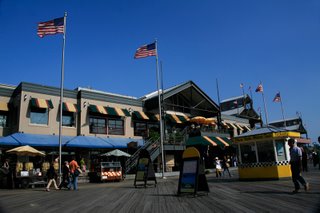
We headed to the South Street Seaport for lunch. This area has a great maritime museum with several great ships to visit. There is also a mall complete with seafood restaurants on the first level and a complete food court on the top floor. There are also lots of nice shops. Across the street was an exhibit -Bodies-The Exhibition. After lunch and some shopping, the rest of the crew headed over to see the human dissections. Knowing that my body was going to have limited stamina, I enjoyed watching the people pass by while I sat on one of the benches. There were a few photo opportunities I let slide by. I saw several homeless people with their dollies, big box, and belongings wrapped in old sheets pass by. I also saw a Japanese tour bus unload its tourist group -some dressed up in fancy suits, others in blue jeans.
From the seaport, we headed to the Stanton Island Ferry, one of the great free activities. While the local people use it to get to and from work, as a tourist,

it provides a great view of the Statue of Liberty and the New York skyline. There are a couple of styles on these boats. The first one did not have the outdoor observation deck that I prefer, so we waiting on the Stanton Island side and rode back on a different one.
We took the subway to Central Park and walked across and took a carriage ride. PETA wants to end this tradition claiming that the tradition is cruel to the horses. Having owned a horse for a number of years, I can't agree. Horses have been bred for generations to be "working" animals. While accidents can and do happen, they can happen even in pastures and barns. The horse drawn carriages provide a taste of the past and a slow paced view of Central Park. Most of the drivers give you a short commentary about the parts of the park you are going through.
Near Central Park is FAO Schwarz. Knowing it had gone through some financial difficulties, I was pleased to find it still in business. SInce Ginny was shopping for her grandchildren, I knew she would want to go there. Once again (uncharacteristically), I found a seat by the fountain and enjoyed the growing twilight and watching the people come and go. The fountain provide a soothing backdrop.
The famous Plaza hotel is getting a facelift. It is being turned into residences. I don't know whether it will still have hotel rooms. The new residences will certainly be prime places to live situated right at Central Park and the Shopping District. In checking the web, starting prices are $1.5 million dollars. I find myself a little sad that this landmark hotel will no longer be in the hotel business.
After going back to the hotel to get my camera batteries recharged and drop off Ginny's purchases, we headed out to dinner. After much deliberation we headed for an Irish Pub that I knew about near Madison Square Garden. While I had Shepherd's Pie, the others had halibut and codd.
Last stop for the day, back to the Empire State building to view the city at night. We had learned earlier in the day that there was a higher observation deck on the 102nd floor. We added that ticket and headed up. Once again, no line!!!!!!!

When we first got to the 102 floor the clouds swirled around us. Pictures through glass are challenging, but since they don't allow tripods, holding the camera lens right against the glass helped stabilize for somewhat sharper images.

Back at the lower level, I played with the ISO and with balancing the camera lens on the fencing to get these images.
We got back to the hotel, tired, sore, but pleased with our day.

First stop was the Empire State Building. This must be the slow season. We had purchased our tickets online, but there were no lines to get up to the top. We had a beautiful, clear, blue sky day. While there was haze in the sky to the south, my pictures of the north end of Manhattan seemed to have turned out pretty well. We stopped back by the room.
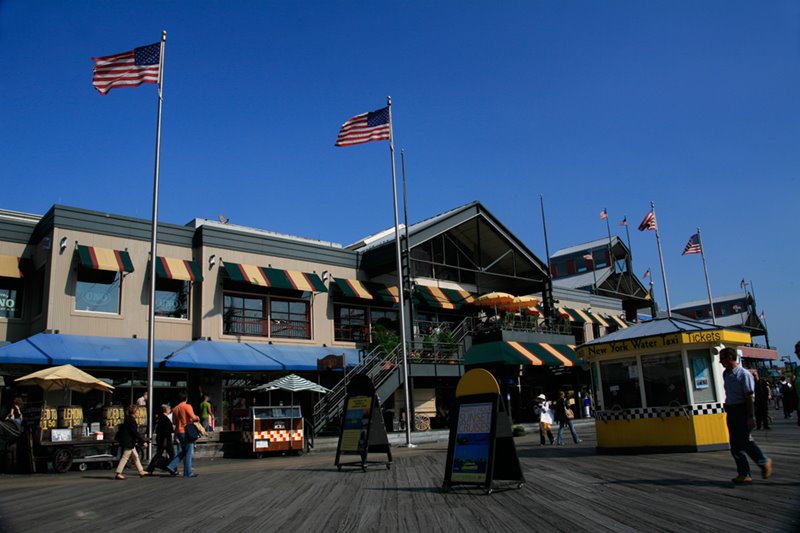
We headed to the South Street Seaport for lunch. This area has a great maritime museum with several great ships to visit. There is also a mall complete with seafood restaurants on the first level and a complete food court on the top floor. There are also lots of nice shops. Across the street was an exhibit -Bodies-The Exhibition. After lunch and some shopping, the rest of the crew headed over to see the human dissections. Knowing that my body was going to have limited stamina, I enjoyed watching the people pass by while I sat on one of the benches. There were a few photo opportunities I let slide by. I saw several homeless people with their dollies, big box, and belongings wrapped in old sheets pass by. I also saw a Japanese tour bus unload its tourist group -some dressed up in fancy suits, others in blue jeans.
From the seaport, we headed to the Stanton Island Ferry, one of the great free activities. While the local people use it to get to and from work, as a tourist,

it provides a great view of the Statue of Liberty and the New York skyline. There are a couple of styles on these boats. The first one did not have the outdoor observation deck that I prefer, so we waiting on the Stanton Island side and rode back on a different one.
We took the subway to Central Park and walked across and took a carriage ride. PETA wants to end this tradition claiming that the tradition is cruel to the horses. Having owned a horse for a number of years, I can't agree. Horses have been bred for generations to be "working" animals. While accidents can and do happen, they can happen even in pastures and barns. The horse drawn carriages provide a taste of the past and a slow paced view of Central Park. Most of the drivers give you a short commentary about the parts of the park you are going through.
Near Central Park is FAO Schwarz. Knowing it had gone through some financial difficulties, I was pleased to find it still in business. SInce Ginny was shopping for her grandchildren, I knew she would want to go there. Once again (uncharacteristically), I found a seat by the fountain and enjoyed the growing twilight and watching the people come and go. The fountain provide a soothing backdrop.
The famous Plaza hotel is getting a facelift. It is being turned into residences. I don't know whether it will still have hotel rooms. The new residences will certainly be prime places to live situated right at Central Park and the Shopping District. In checking the web, starting prices are $1.5 million dollars. I find myself a little sad that this landmark hotel will no longer be in the hotel business.
After going back to the hotel to get my camera batteries recharged and drop off Ginny's purchases, we headed out to dinner. After much deliberation we headed for an Irish Pub that I knew about near Madison Square Garden. While I had Shepherd's Pie, the others had halibut and codd.
Last stop for the day, back to the Empire State building to view the city at night. We had learned earlier in the day that there was a higher observation deck on the 102nd floor. We added that ticket and headed up. Once again, no line!!!!!!!

When we first got to the 102 floor the clouds swirled around us. Pictures through glass are challenging, but since they don't allow tripods, holding the camera lens right against the glass helped stabilize for somewhat sharper images.
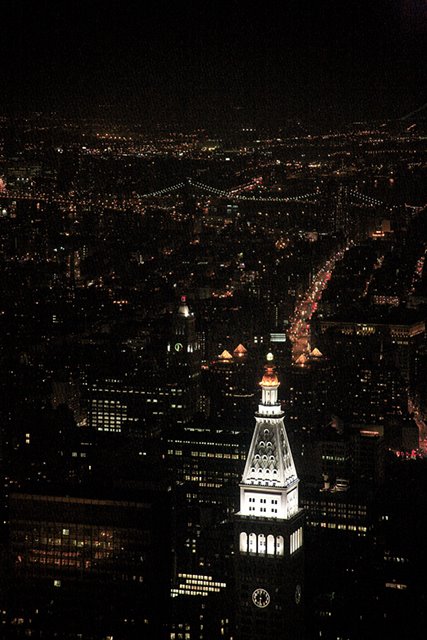
Back at the lower level, I played with the ISO and with balancing the camera lens on the fencing to get these images.
We got back to the hotel, tired, sore, but pleased with our day.
Wednesday, September 27, 2006
New York - Day 1
Well, I made it to New York. I want to tell some of the good people stories that I'ved already experienced. We flew into Islip. We found out as we were waiting for the train shuttle that we had missed the 4:45 train Ronkonkamo into Penn Station. The next one did not leave until 7:00. We had tickets for Phantom of the Opera at 8:00. I was concerned . . When the next shuttle came, the bus driver repeated the problem, but had another train station that he could get us to for just a little more money. We would depart at 5:45. He gave a running commentary of the house prices (whew I won't be buying property here).
Then after we changed trains at Babylon station, another kind gentleman offered and did put my larger bag up high out of the way. And then as he was departing the train, he asked again, and took it down for me. I was very grateful.
As we were leaving the train at Penn Station, I headed us toward the handicap exit as we were carrying baggage. One person tried to tell us it would not work. But I persevered folloing the handicap signs and sure enough there was a working elevator. It was closing, but the lady saw me and held it while my friends and I got on. Then she saw our hesitation as to which route to exit, and told us to follow her. In doing so we made it all the way to street level without having to walk our luggage up stairs - definitely an angel in disguise. I sure want to remember that entrance (it's on the east side) because you can go up and down on escalators. Last year I hauled baggage up and down stairs. (Or more accurately I hauled it up when I came into town. A nice stranger hauled it down when I went back to the train station to leave.)
We did have to hustle, we were a few minutes late to Phantom of the Opera. We went and ate at my traditional after play restaurant, Roxy's.
It has been a good first day.
Then after we changed trains at Babylon station, another kind gentleman offered and did put my larger bag up high out of the way. And then as he was departing the train, he asked again, and took it down for me. I was very grateful.
As we were leaving the train at Penn Station, I headed us toward the handicap exit as we were carrying baggage. One person tried to tell us it would not work. But I persevered folloing the handicap signs and sure enough there was a working elevator. It was closing, but the lady saw me and held it while my friends and I got on. Then she saw our hesitation as to which route to exit, and told us to follow her. In doing so we made it all the way to street level without having to walk our luggage up stairs - definitely an angel in disguise. I sure want to remember that entrance (it's on the east side) because you can go up and down on escalators. Last year I hauled baggage up and down stairs. (Or more accurately I hauled it up when I came into town. A nice stranger hauled it down when I went back to the train station to leave.)
We did have to hustle, we were a few minutes late to Phantom of the Opera. We went and ate at my traditional after play restaurant, Roxy's.
It has been a good first day.
New York - Day 1
Well, I made it to New York. I want to tell some of the good people stories that I'ved already experienced. We flew into Islip. We found out as we were waiting for the train shuttle that we had missed the 4:45 train Ronkonkamo into Penn Station. The next one did not leave until 7:00. We had tickets for Phantom of the Opera at 8:00. I was concerned . . When the next shuttle came, the bus driver repeated the problem, but had another train station that he could get us to for just a little more money. We would depart at 5:45. He gave a running commentary of the house prices (whew I won't be buying property here).
Then after we changed trains at Babylon station, another kind gentleman offered and did put my larger bag up high out of the way. And then as he was departing the train, he asked again, and took it down for me. I was very grateful.
As we were leaving the train at Penn Station, I headed us toward the handicap exit as we were carrying baggage. One person tried to tell us it would not work. But I persevered folloing the handicap signs and sure enough there was a working elevator. It was closing, but the lady saw me and held it while my friends and I got on. Then she saw our hesitation as to which route to exit, and told us to follow her. In doing so we made it all the way to street level without having to walk our luggage up stairs - definitely an angel in disguise. I sure want to remember that entrance (it's on the east side) because you can go up and down on escalators. Last year I hauled baggage up and down stairs. (Or more accurately I hauled it up when I came into town. A nice stranger hauled it down when I went back to the train station to leave.)
We did have to hustle, we were a few minutes late to Phantom of the Opera. We went and ate at my traditional after play restaurant, Roxy's.
It has been a good first day.
Then after we changed trains at Babylon station, another kind gentleman offered and did put my larger bag up high out of the way. And then as he was departing the train, he asked again, and took it down for me. I was very grateful.
As we were leaving the train at Penn Station, I headed us toward the handicap exit as we were carrying baggage. One person tried to tell us it would not work. But I persevered folloing the handicap signs and sure enough there was a working elevator. It was closing, but the lady saw me and held it while my friends and I got on. Then she saw our hesitation as to which route to exit, and told us to follow her. In doing so we made it all the way to street level without having to walk our luggage up stairs - definitely an angel in disguise. I sure want to remember that entrance (it's on the east side) because you can go up and down on escalators. Last year I hauled baggage up and down stairs. (Or more accurately I hauled it up when I came into town. A nice stranger hauled it down when I went back to the train station to leave.)
We did have to hustle, we were a few minutes late to Phantom of the Opera. We went and ate at my traditional after play restaurant, Roxy's.
It has been a good first day.
Tuesday, September 26, 2006
Perfectionism VS Professionalism
Since I'm heading for New York City tomorrow, I've been hurrying around the last few days trying to finish up some projects. Two big ones needed to be done - finish the income taxes and get a photo submission off. The photo submission is a once a year museum contest in Ruiodoso, New Mexico. This will be the fourth year I've entered. It involves making prints, cutting foam core, cutting mats, and assembling. In other years, when I was entering a contest, I would rework my photos for each one. And at the time that was reasonable because my photoshop skills were still improving dramatically every six months. This year I've been doing a pretty good job of working the best photos shortly after I take them. I have a system that tells me whether I've sharpened (the stock agencies and some of the magazines do not want the photos sharpened). Sometimes I store it as a photoshop file - a work in progress. Sometimes I save it both as an unsharpened tiff and as a sharpened tiff. This made it easy this year. I started printing the photos last night. With a few exceptions, I just resized for my larger print size and printed. This is a step forward, because it means I am trusting that my prior work is really good enough. I was able to get the foam boards cut, the mat boards ready. While not finished, all that is lacking is permanently assembling them, something that can be done in the RV.
My taxes this year are somewhat the same way. Other years I've tried to wait until I have time to concentrate on taxes and get all the details just so. This year has been very full of events, yes, more important than taxes. Thankfully, this year's taxes are easier. I've got four of the six finished. Once again, I'm trusting that the earlier work that I did was correct the first time rather than double checking it three or four times. Now, if I could only learn to do that EARLY in the year, rather than at the last minute.
My taxes this year are somewhat the same way. Other years I've tried to wait until I have time to concentrate on taxes and get all the details just so. This year has been very full of events, yes, more important than taxes. Thankfully, this year's taxes are easier. I've got four of the six finished. Once again, I'm trusting that the earlier work that I did was correct the first time rather than double checking it three or four times. Now, if I could only learn to do that EARLY in the year, rather than at the last minute.
Monday, September 25, 2006
Odonata Central
With 826 species of damselflies and 1069 species of dragonflies, it is important to have a comprehensive resource for identification. Dr. John Abbott's Odonata Central is one such source. The Field Guide is set up by scientific name with the common name folloowing. You can click on a species and you will go to a page with a photo and a description which includes information on specific identifying characteristics to look for. In addition, each species has a photo gallery. I find that photo gallery especially useful because it shows both male and female forms and different angles which allows me something very visible and concrete to compare my photo against. You can also get information as to seasonality and where in Texas it has been found.

Dr. Abbott's book Dragonflies and Damselflies of Texas and the South Central United States is a great reference. I use it to make my initial guess and then I go to the website to view the photo gallery for the species. The book is arranged by the scientific organization. Hopefully eventually I will get more familiar with each type of damsel and dragonfly. While geared toward the south central United States, I think this would be a great reference for other people.
The website is dynamic and continues to add new species and records for new species. And this is where people like some of you and me can help out. The New Records section is a place to document which species are found where and when in Mexico, United States, Canada. I know some of you reading this are elsewhere in the world, but don't let that deter you . . . . Here is how these records work, people like us who take photographs can submit records to this growing database. To submit a record, you need to be able to identify your dragonfly or damsellfly. You must have records as to where you photographed it and the date. With digital cameras date and time is easy. Since I keep my photo records filed by where and when I took them, I can go back two or three years and send in my dragonfly data. Now he prefers latitude and longitude of your sighting or certainly the county (if in the United States). But he also has a link to Google Maps which will help you get the proper latitude and longitude for your sighting. You can also collect your species, but there are rules - you need to preserve them in acetone - there are instructions . . . . Also, there may be local rules and regulations concerning collecting specimens - some places you need a scientific license to do so.
Now if you are outside the United States, Mexico, and Canada, I think he is still interested in getting your data. If you have dragonfly photos with all the necessary information, contact him and perhaps he can add your region to his data base. His contact information is on the website.
The cool thing about this is that your photos can help expand the knowledge base about dragonflies and damselflies. Your photos could be used in the gallery (with your permission, of course). And it could be a chance to get published when he is working on his field guide or other future books. His budget is slim - you won't get paid, but publication in a scientific book would please me no end.
When I get a chance, I'm heading up to the Texas Panhandle, an area that has not been studied because it is such a dry, barren looking area. But I know where many permanent water sources are up there, so if I took the time, I'm thinking I could get several records (being the first one to document a sighting in a particular place.)
One last thing, all photos or specimens are verified - if you have improperly identified a species, it won't make the count. I've mentioned adding a "critique" type gallery where people who are not experts at identification could get help knowing what species their photo is before uploading as a new record.
This website is truly a pioneer effort in how effectively one can use the web as a source in identifying and studying animal families. I think it will be a template for other websites on birds, mammals, tropical fish, etc in the future.

Dr. Abbott's book Dragonflies and Damselflies of Texas and the South Central United States is a great reference. I use it to make my initial guess and then I go to the website to view the photo gallery for the species. The book is arranged by the scientific organization. Hopefully eventually I will get more familiar with each type of damsel and dragonfly. While geared toward the south central United States, I think this would be a great reference for other people.
The website is dynamic and continues to add new species and records for new species. And this is where people like some of you and me can help out. The New Records section is a place to document which species are found where and when in Mexico, United States, Canada. I know some of you reading this are elsewhere in the world, but don't let that deter you . . . . Here is how these records work, people like us who take photographs can submit records to this growing database. To submit a record, you need to be able to identify your dragonfly or damsellfly. You must have records as to where you photographed it and the date. With digital cameras date and time is easy. Since I keep my photo records filed by where and when I took them, I can go back two or three years and send in my dragonfly data. Now he prefers latitude and longitude of your sighting or certainly the county (if in the United States). But he also has a link to Google Maps which will help you get the proper latitude and longitude for your sighting. You can also collect your species, but there are rules - you need to preserve them in acetone - there are instructions . . . . Also, there may be local rules and regulations concerning collecting specimens - some places you need a scientific license to do so.
Now if you are outside the United States, Mexico, and Canada, I think he is still interested in getting your data. If you have dragonfly photos with all the necessary information, contact him and perhaps he can add your region to his data base. His contact information is on the website.
The cool thing about this is that your photos can help expand the knowledge base about dragonflies and damselflies. Your photos could be used in the gallery (with your permission, of course). And it could be a chance to get published when he is working on his field guide or other future books. His budget is slim - you won't get paid, but publication in a scientific book would please me no end.
When I get a chance, I'm heading up to the Texas Panhandle, an area that has not been studied because it is such a dry, barren looking area. But I know where many permanent water sources are up there, so if I took the time, I'm thinking I could get several records (being the first one to document a sighting in a particular place.)
One last thing, all photos or specimens are verified - if you have improperly identified a species, it won't make the count. I've mentioned adding a "critique" type gallery where people who are not experts at identification could get help knowing what species their photo is before uploading as a new record.
This website is truly a pioneer effort in how effectively one can use the web as a source in identifying and studying animal families. I think it will be a template for other websites on birds, mammals, tropical fish, etc in the future.
Sunday, September 24, 2006
Eastern Amberwing
Sometimes you get immediate feedback from a blog entry. This afternoon after we got home from church, Henry called out to me, "hey dragonfly person . . . . " On the path from the backdoor to the RV was an Eastern Amberwing. He had recognized it from yesterday's blog entry. Since it is really the only dragonfly with that size and color, I was pretty sure he was right, but I got down close and personal, made sure the body and wing markings were right. Yup, Eastern Amberwing - in MY backyard.
Because of the pond, I see dragonflies all the time, I just have not had time to go back there and identify the ones we have. But it was a lot of fun to see the little amberwing perching on the grass stems this afternoon.
Unfortunately, this afternoon has to be devoted to mundane paperwork - no more dragonflies for me . . . . sigh.
Because of the pond, I see dragonflies all the time, I just have not had time to go back there and identify the ones we have. But it was a lot of fun to see the little amberwing perching on the grass stems this afternoon.
Unfortunately, this afternoon has to be devoted to mundane paperwork - no more dragonflies for me . . . . sigh.
Saturday, September 23, 2006
Dragonfly Identification Class
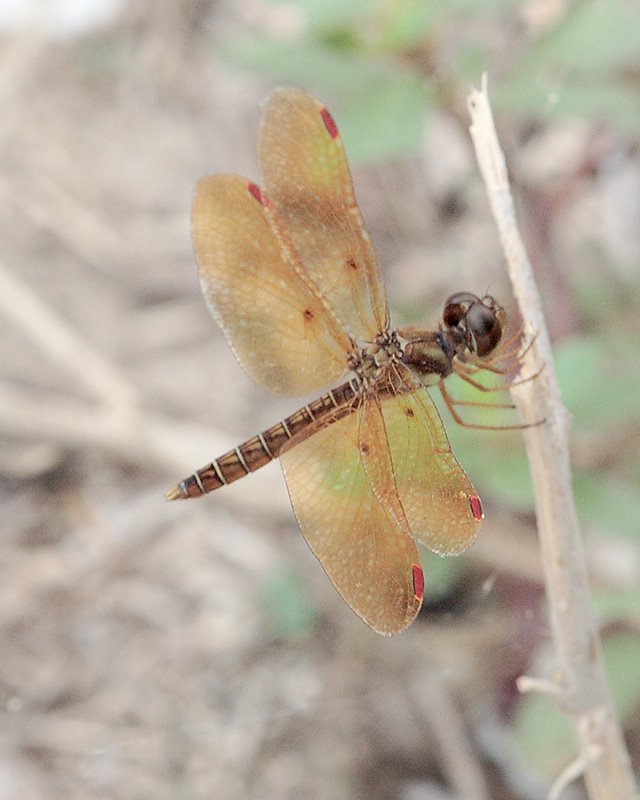
Eastern Amberwing
Well, I really enjoyed the Dragonfly class. I definitely feel a little overwhelmed. There are SO MANY dragonflies and damselflies. Many of them are very similar to one another with these small details distinguishing them.
As far as I'm concerned, I think the blue ones are the worst, because many dragonflies turn blue with age - they call it pruinescence- it is a waxy coating that develops with age.
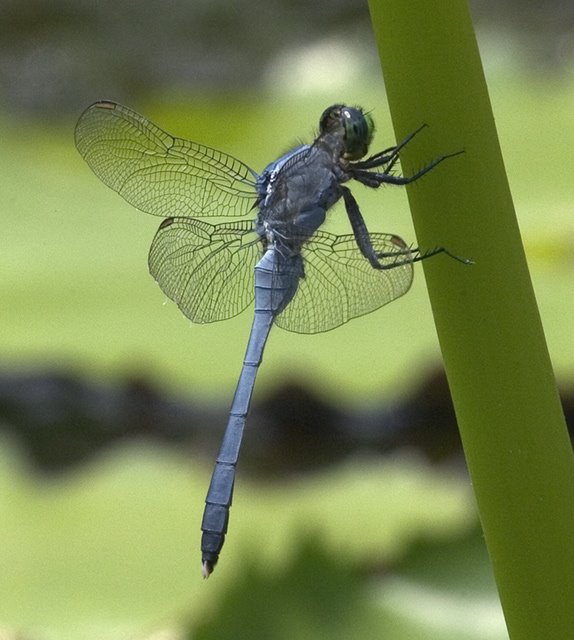
I'm hoping to go back and make my own notebook from my notes in class and his power point presentation. Dr. Abbott did an excellent job of going over a large number of species pointing out the distinctive markings and coloration. As I sat in class listening and taking notes, part of my brain said, "Oh my . . . . You'll never remember all this, too many details, too many species . . . .EEEK!" And I love his website, Odonata Central. If you already know roughly which species, you can go to the Field Guide. There you can see a sample photo or a gallery of photos to compare your specimen or photo (I'll be taking photos.) If you don't know which species, in the main Photo Gallery are thumbnails of each species.
 I have his book Dragonflies and Damselflies of Texas. I will probably do my "first guess" from those photos. I am finding after making this first best guess, that it helps a lot to go to the information pages and read about the specific identifying markers. Then I go to the website and compare my photos with the photo gallery. It helps when I can find one that is perched similarly to the one in my photo.
There was another book that people were using on the field trip: Stokes Beginner's Guide to Dragonflies. It is smaller in size and has larger photos. While not as comprehensive as Dr. Abbott's book, it is easier to carry around. He is working on a field guilde, I will probably purchase that when it comes out.
The field trips have been especially helpful. When you walk through dragonfly habitat with someone who knows what they are looking for, you actually see more different species.

The damselflies are so tiny, they are hard to see. Having a group of people all looking helps everyone see more individual species. Plus they had nets and captured some. After capture he had clear bags for us to study the differences between species before releasing them. One word of caution, don't stand very close to him . . . .a couple of times there were some close misses as he was trying to capture some dragonflies in flight. I did not take many photos the first field trip, partly because there were so many of us, I did not think I was getting close enough to get usable shots, and I wanted to concentrate on learning. However, those first shots came out better than I expected. So I took more shots on the second field trip. While there were others who were documenting the name of each species we saw, I find it difficult to lug around the camera and binoculars, take the photos, and write at the same time. So I'm trusting to my memory, checking the photos in the books, and hoping that I'm identifying these photos correctly.
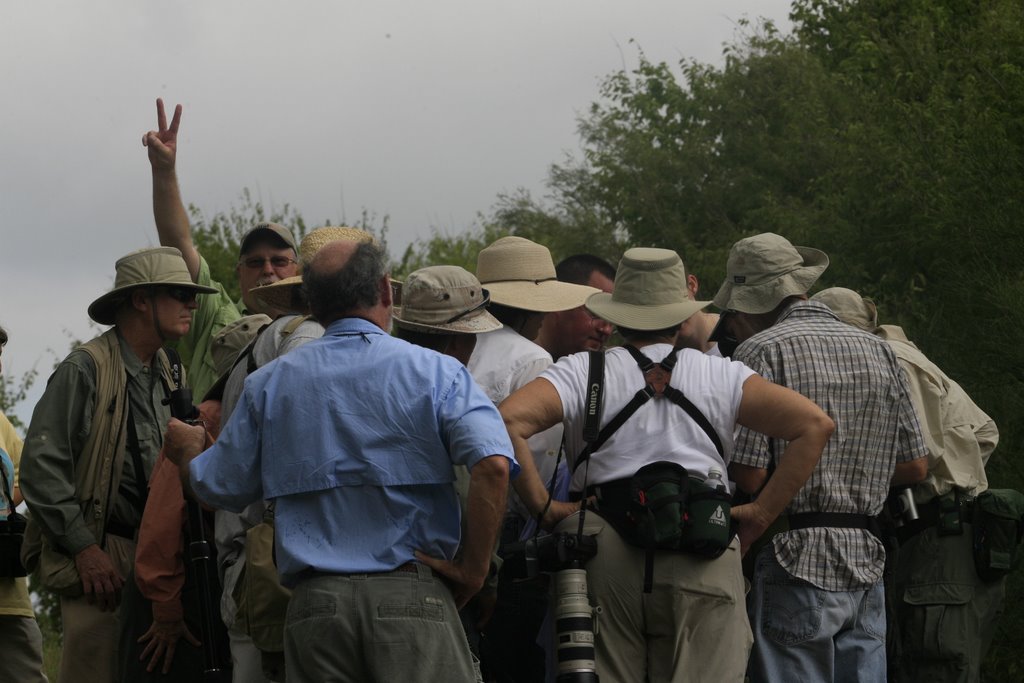 I took a few photos of the group clustered around examining one of the captured specimens. We were all eager to see all the details-color, size, markings,etc.
  And Dr. Abbott was so good at the details of each one.
 I've made a Dragonfly page on my website that has most of my dragonfly photos both from this class and from before.
Hummmm . . . .Should I get a butterfly net?
Thursday, September 21, 2006
State Parks, Toll Roads, Taxes, and Politics
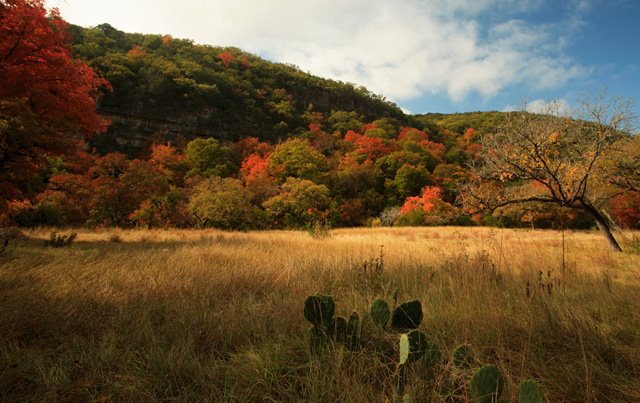
Tonight I went to my first Audubon Society meeting. (Now I may have gone to a meeting or a bird slide show as a child . . . but that was a long time ago.) I was looking forward to it. There was going to be a presentation by Texas Parks and WIldlife.
Sigh . . . . .
I came home depressed.
I've been visiting state parks since I was a child. I grew up in the flat panhandle of Texas. Palo Duro Canyon was a welcome scenic respite with its panoramic beauty, tall cottonwood trees, and flowing water in the midst of the dry prairie. The cottonwood trees of my childhood have died. I was there this year and they are cutting the rotting trunks down. Sadly, there don't seem to be new generations of cottonwoods coming up to take their place. While I don't know why there are not younger cottonwood trees, I suspect that the lakes in the watershed above have removed some of the water flow that fed these trees. Or perhaps the pumping of the aquifer for city water and irrigation has left the water table too low to nurture these water loving trees. With our family living in Amarillo, I've made frequent trips to Palo Duro Canyon throughout my adult years. It holds a special place in my heart.
Since moving to Austin, we've frequented the parks in the surrounding area - McKinney Falls, Bastrop, Pedernales Falls, Palmetto, Dinosaur Valley, Inks Lake, Enchanted Rock, Lost Maples, etc. While we don't buy a park pass every year, we have bought them frequently. We've hiked them, biked them, and camped in them. I have many special memories.

Walt Dabney, Director of State Parks, gave a presentation. It was a good presentation, emphasizing all the good and important facets of parkland - historical, scenic, recreation, and the economic value to the surrounding communities. So why was this presentation distressing? . . . . Sometime in the late 1990's tax money derived from the sale of sporting and camping equipment that had originally been earmarked for state parks was capped and the money diverted to other projects. Just as the costs for everything we do in our personal lives has gone up in price - so has the cost to operate and maintain state parks. The costs to provide personnel, repair, and maintain the facilities has risen dramatically, but the tax dollars to fund this seems to have been kept at a fixed rate. So . . . . . . facilities at many parks are in disrepair, historical buildings are decaying, and park hours and days of operation have been severely curtailed. The park service vehicles average about 10 years old, the tractors and mowers are being scavenged for parts to keep other ones going. We've actually lost 7 parks.
I know for a fact that there are still several special areas in Texas that deserve protection as parkland. Plus as our population continues to grow, we will need more park area to accommodate the additional people. And with land values continually increasing, land should be purchased now. Not only will it be cheaper to buy land now, but later those special places could easily be covered in houses, shopping malls, or business parks.
How did we as Texans allow our parks to get in this sad shape? Part of it is apathy - what is out of sight is out of mind. If we go to a state park, find it to be closed, or notice crumbling infrastructure, we may be dismayed, but we probably don't go home and write our representatives to protest.
But when the subject of taxes comes up, oh boy, the vocal people come out in droves. It seems that no one wants to pay any more tax than they have to . . . . tax reform and no new taxes are popular campaign slogans. And our country was founded in a way in a tax revolt. Remember Boston Harbor and that tea????? Remember that slogan, "No taxes without representation!" But I think sometimes we get so caught up in trying to save a buck, that we forget what taxes are for.
Taxes are designed to benefit the whole community. As a democracy, we get to vote directly on many issues - school bonds for example. But on other issues, we elect representatives to decide what tax dollars should be spent on and how people will be taxed to provide the money for the needed projects.
And in Texas we've been fighting about how to do taxes for a long time. We've been fighting over how to fund our children's education for years now. We're building our new roads as toll roads rather than raise taxes to pay for them. And I hear that this time, these roads will remain toll even after they are paid for. We live next to the newest of Texas' toll roads, nearing completion. There is a group of people fighting the toll concept. It is obvious that we don't want to add taxes to build these necessary roads, so I think toll is here to stay.
Let's see now - taxes build roads, fund some hospitals, provide Emergency Medical Services, Fire Departments, Police Departments, State Troopers, build schools, pay educators, buy textbooks, build jails, pay jailers, provide services for needy people, provide community library services, build parks, provide hike and bike trails, recreation centers with workout rooms, fitness classes, swimming pools . . . . . the list goes on and on and on. We may argue over how to allocate tax money among these things, but they are all important to us as a society.
So why did I come home depressed? Sometimes I feel like I am only one person. I have many things I am interested in and care about, but I only have a finite amount of time. The major problems with the state parks concern me a great deal - they are something I value highly. Often I feel like I am walking to the drum of a different drummer in terms of politics. During so much of my life the popular political tides did not reflect my beliefs. When it was "popular" to be Democratic and liberal, I was Republican and conservative. I don't feel that my values have changed that much, but now I find myself not in tune with the current popular political thinking. I do care about environmental issues and providing safety nets for people in need.
If the problems in our state parks disturbs you, (and it DOES disturb me - in terms of spending Texas is 49th in how much it spends on its parks!) take time to write your state representatives in the House and Senate. Write them a physical letter, not an email. Tell them about why you value your local state park and why you think that funding state parks is important. (And it is amazing the economic impact a state park has for the communities near it - tourist dollars from visitors from all over the United States benefits our economy.)
Our national Parks are a whole other story . . . . they need attention now also. Write your US Congressman and Senator to remind them that we still value our parklands and historical sites.
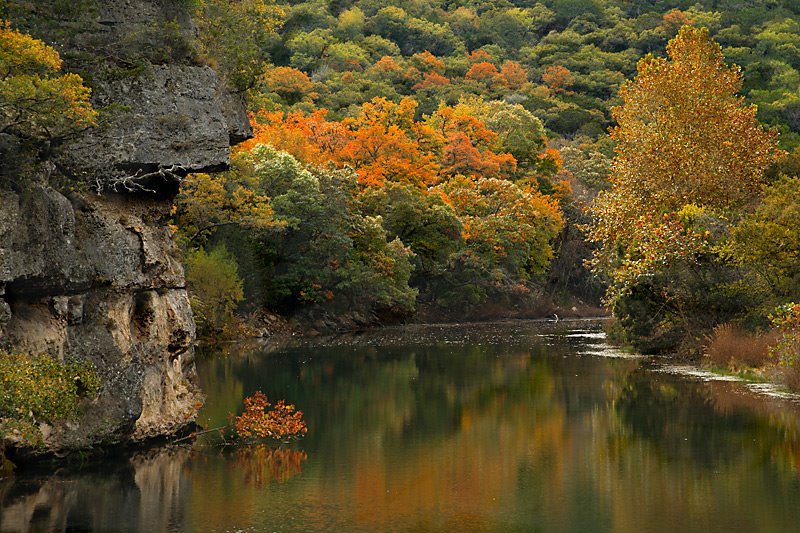
Wednesday, September 20, 2006
TexBirds, Tex Odes, and Citizen Scientists
I have recently joined the listserve Texbirds. While it definitely fills my mailbox, I find the information useful. I have followed up on a few things from the information. I went over to see a Mississippi Kite which had been sighted in the Round Rock area. While I did not get over there while they were nesting, I did get to see one. I've already mentioned the Hornsby Bend event I attended. I met Roxy, a member of the Travis Count Audubon Society there. She encouraged me to attend some classes sponsored by the Society. When I saw the dragonfly class I was hooked.
But another interesting element of the Texbird listserve is to realize t he research done by "citizen scientists." I've forgotten exactly where I saw that termnology, but it is an amazing concept. So much of scientific research involves tedious cataloging and observation hours out in the field. Many of today's scientists are professors with limited budgets and resources. But there are a lot of folks out there who are interested in the natural world, people who spend a lot of time learning about birds, insects, flowers, mammals, etc. Texbirds is one place where these people can record what species of bird was seen, at what location, at what date, at what time of day, etc. There are numerous bird counts going on right now due to the fall migration. Dedicated volunteers are manning sites and doing daily bird counts. And there are scientists who are using some of this information to further our knowledge of migration patterns, changing ranges of certain species, population studies, etc.
While my primary tasks over the last 25 years involved raising my children (yes, I did more than just that - I need to post my resume some day) , I've always been interested in science. My degree from the University of Texas is a Bachelor of Science. When my children were young, and I was involved with Girl Scouting and Boy Scouting, I always encouraged the children in my groups to explore and learn about the outdoors. On our family vacations we took the identification books and made our own lists of species we saw on different trips (BTW we computerized some of them - I bet we still have them!). Now as a nature photographer, I am hoping to share my love of the outdoor world with people who may not have the opportunity to spend as much time outside as I do.
Dr. Abbott who taught the dragonfly class is also using these "citizen scientists" to learn more about which dragonflies and damselflies are located where. I like this concept - ordinary but trained people out enjoying the natural world but also being active participants in furthering scientific knowledge. Hold that thought . . . . there will be more to come . . . .
But another interesting element of the Texbird listserve is to realize t he research done by "citizen scientists." I've forgotten exactly where I saw that termnology, but it is an amazing concept. So much of scientific research involves tedious cataloging and observation hours out in the field. Many of today's scientists are professors with limited budgets and resources. But there are a lot of folks out there who are interested in the natural world, people who spend a lot of time learning about birds, insects, flowers, mammals, etc. Texbirds is one place where these people can record what species of bird was seen, at what location, at what date, at what time of day, etc. There are numerous bird counts going on right now due to the fall migration. Dedicated volunteers are manning sites and doing daily bird counts. And there are scientists who are using some of this information to further our knowledge of migration patterns, changing ranges of certain species, population studies, etc.
While my primary tasks over the last 25 years involved raising my children (yes, I did more than just that - I need to post my resume some day) , I've always been interested in science. My degree from the University of Texas is a Bachelor of Science. When my children were young, and I was involved with Girl Scouting and Boy Scouting, I always encouraged the children in my groups to explore and learn about the outdoors. On our family vacations we took the identification books and made our own lists of species we saw on different trips (BTW we computerized some of them - I bet we still have them!). Now as a nature photographer, I am hoping to share my love of the outdoor world with people who may not have the opportunity to spend as much time outside as I do.
Dr. Abbott who taught the dragonfly class is also using these "citizen scientists" to learn more about which dragonflies and damselflies are located where. I like this concept - ordinary but trained people out enjoying the natural world but also being active participants in furthering scientific knowledge. Hold that thought . . . . there will be more to come . . . .
Mundane Things
I head out for New York City this time next week. I knew when I got home in July that I had a limited amount of time to get a lot done. Now I have a week to finish the most important tasks. While I have gotten a lot done the last two and one half months, there is still a lot undone on my to do lists.
Today needs to be a mundane day - going through mail, filing, throwing away, paying bills and doing paperwork that I have procrastinated on. I find myself wanting to work on the photography projects that also need to be done before I leave. I also find myself sitting at the computer trying to psyche myself up to get started on them. Sometimes it is hard to stay focused on the necessary, tedious, mundane tasks. The other facet of these mundane tasks is how easy it is to get the bulk of a task done, but not truly "finish" it.
This morning I asked God to help me get this set of paperwork tasks done. The undone paperwork hangs over my head and weighs me down. While I know I won't finish all of the backlog of paperwork things today - there are several paperwork tasks that really must be done before we head out for our next set of adventures. I've asked God to help me stay on target and finish these. And, hopefully, I'll get the photography tasks finished as well.
Today needs to be a mundane day - going through mail, filing, throwing away, paying bills and doing paperwork that I have procrastinated on. I find myself wanting to work on the photography projects that also need to be done before I leave. I also find myself sitting at the computer trying to psyche myself up to get started on them. Sometimes it is hard to stay focused on the necessary, tedious, mundane tasks. The other facet of these mundane tasks is how easy it is to get the bulk of a task done, but not truly "finish" it.
This morning I asked God to help me get this set of paperwork tasks done. The undone paperwork hangs over my head and weighs me down. While I know I won't finish all of the backlog of paperwork things today - there are several paperwork tasks that really must be done before we head out for our next set of adventures. I've asked God to help me stay on target and finish these. And, hopefully, I'll get the photography tasks finished as well.
Tuesday, September 19, 2006
Sigma 300-800mm Lens
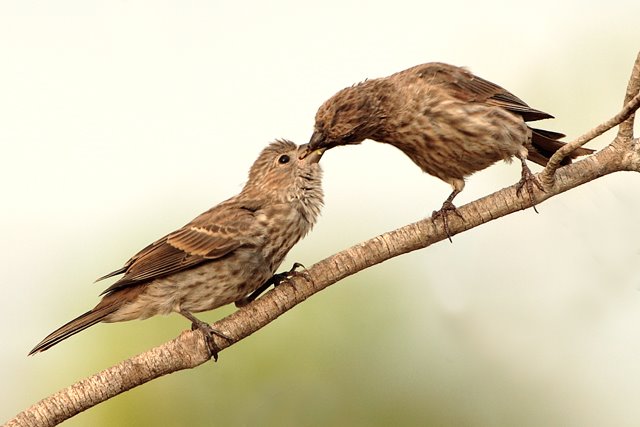
I love to do wildlife photography. Going out into a wildlife refuge or a national park, learning where to find the wildlife, and getting to see God's wonderful creation gives me a natural high. Being a photographer, I want to take photos not only for my own personal memories, but also to share with others. When I first moved up from a digital point and shoot to a digital SLR, I bought the Canon 100-400 IS lens. For many situations, it worked beautifully. But . . . . for others, the wildlife was too far away to get quality photos. On my first trip to Bosque del Apache, I saw so many truly large lenses - talk about lens envy!!!!!
So I began to dream of a day when I too would have a large lens. It seemed far away.
I had an opportunity in South Texas to take some shots with a Canon 600mm lens with a couple of teleconverters and another opportunity to play with the Sigma lens. Even with the teleconverters, the duck in the distance that I shot with the 600mm lens was still very small - not the quality shot I was yearning for. In talking with the owner of the Sigma lens, he said that he had compared shots with the Canon lens and with a Sigma before he purchased. He felt that the Sigma lens produced a higher quality image.
From all those opportunities when the bird or coyote was too far away, I knew that bigger was likely to be better. Teleconverters not only reduce the amount of light coming into the camera, but they also put more layers of glass between your subject and your camera's sensor. Plus the autofocus does not work as well with the teleconverters. (And I have not had great luck doing manual focus with my digital SLR's. I have yet to add the focusing screen to my 5D-that could change my mind on manual focus.) So when the money became available, I went with the Sigma lens. I also bought a sturdy tripod for it and a Wimberly head.
The photo at the top of this blog was made on my porch with my Sigma lens. Other photos to reference for image quality for this lens:
My seals' webpage
The Bosque '05 photos
An Intimate Landscape at La Jolla
Monday, September 18, 2006
Heavenly Music
I feel very fortunate to be a member at Brentwood Oaks Church of Christ. We've had a unique opportunity recently. We are connected with the churches in St. Petersburg, Russia. One of the Russian Christians there is a musical composer. We've been privileged to be singing one of his songs, "My God and King" based on Psalms 84. The words and melody linger in my mind.
Two weeks ago on Wednesday evening, the composer, Konstantin Khiguln, his wife and another Russian young woman visited our chorus class. They sang for us. It was like hearing angel voices. This was all the more special because I can remember when some members of our congregation began going to St. Petersburg around 15 years ago. I remember a young American who had just become a Christian become educated at the Institute for Christian Studies (now Austin Graduate School of Theology.) He heard and responded to the call and went to live in Russia. Watching Konstantin lead us in learning his beautiful songs that Wednesday gave me a small sense of God's amazing power to spread his love to all of us. His joy in knowing Christ was radiant that evening.
This past Sunday evening the worship service centered on the work in Russia. One highlight was having Konstantin Zhigulin lead the congregation in "My God and King." This was followed by our Russian brothers and sisters singing some of these beautiful new hymns. And then a small group of local singers joined them for more of these new hymns.
For those of you in the Texas area, there are some more opportunities to hear these new and beautiful hymns:
Tues. Sept 19 - 8:00 P.M. Abilene Christian University Lectureship - General Session
- 8:30 P.M. Abilene Christian University Campus - Williams Performing Arts Center, Recital Hall
Wednesday, Sept. 20 - High Pointe Church of Christ, McKinney, Texas
Saturday, Sept. 23 - 7:00 P.M. Richland Hills Church of Christ, 24/7 Conference Room Richland Hills, Texas
Sunday, Sept 24 - 9:00 A.M. Duncanville Church of Christ, Duncanville, Texas
Sunday, Sept. 24 - 5:30 p.m. Pleasant Ridge Church of Christ, Arlington, Texas
The Russian and Austin area singers have made a CD that is available. Cost is $20.00. I highly recommend it. There is also a Russian language CD with some additional chamber music that Konstantin has written. If any of my readers are interested in ordering these CD's, contact me and I'll send you the email information.
Two weeks ago on Wednesday evening, the composer, Konstantin Khiguln, his wife and another Russian young woman visited our chorus class. They sang for us. It was like hearing angel voices. This was all the more special because I can remember when some members of our congregation began going to St. Petersburg around 15 years ago. I remember a young American who had just become a Christian become educated at the Institute for Christian Studies (now Austin Graduate School of Theology.) He heard and responded to the call and went to live in Russia. Watching Konstantin lead us in learning his beautiful songs that Wednesday gave me a small sense of God's amazing power to spread his love to all of us. His joy in knowing Christ was radiant that evening.
This past Sunday evening the worship service centered on the work in Russia. One highlight was having Konstantin Zhigulin lead the congregation in "My God and King." This was followed by our Russian brothers and sisters singing some of these beautiful new hymns. And then a small group of local singers joined them for more of these new hymns.
For those of you in the Texas area, there are some more opportunities to hear these new and beautiful hymns:
Tues. Sept 19 - 8:00 P.M. Abilene Christian University Lectureship - General Session
- 8:30 P.M. Abilene Christian University Campus - Williams Performing Arts Center, Recital Hall
Wednesday, Sept. 20 - High Pointe Church of Christ, McKinney, Texas
Saturday, Sept. 23 - 7:00 P.M. Richland Hills Church of Christ, 24/7 Conference Room Richland Hills, Texas
Sunday, Sept 24 - 9:00 A.M. Duncanville Church of Christ, Duncanville, Texas
Sunday, Sept. 24 - 5:30 p.m. Pleasant Ridge Church of Christ, Arlington, Texas
The Russian and Austin area singers have made a CD that is available. Cost is $20.00. I highly recommend it. There is also a Russian language CD with some additional chamber music that Konstantin has written. If any of my readers are interested in ordering these CD's, contact me and I'll send you the email information.
Sunday, September 17, 2006
Dragonfly Field Trip
Roseate Skimmer

Checkered Setwing

Dr. Abbott took us out in the field at the Brackenridge Field Laboratory. While the day was warm and muggy, I very much enjoyed walking around. I brought my camera and tripod rather than binoculars. While I was out there, I was regretting the decision because it was heavy and awkward to lug around. Binoculars seemed the better and lighter choice. And I did not have the close focus binoculars. Dr. Abbott took pity on me and loaned me his binoculars. At first the dragonflies were too far away for the equipment I brought. But because I am a photographer at heart, I did take a few photos. I'm glad now I did. Some of them came out better than I expected.

We got to see a dragonfly naiad emerging. When we first saw him, he was coming out of the exoskeleteon. With the photos you can see him blowing up his wings.
The pictures were taken just a few minutes apart.

Another recently emerged naiad in the same concrete pond, blowing up his wings.
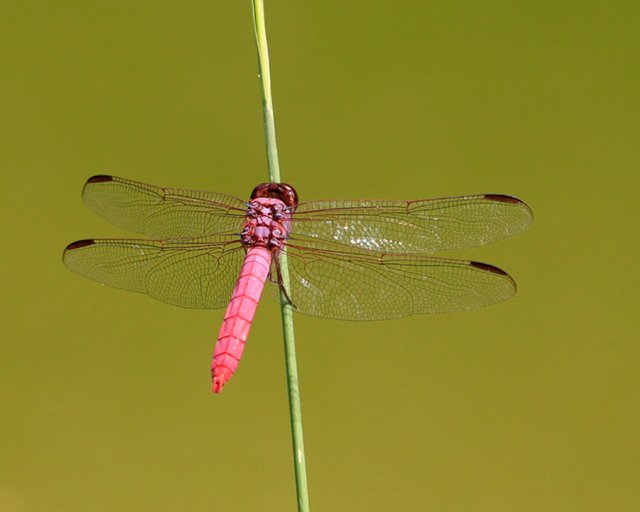
Checkered Setwing

Dr. Abbott took us out in the field at the Brackenridge Field Laboratory. While the day was warm and muggy, I very much enjoyed walking around. I brought my camera and tripod rather than binoculars. While I was out there, I was regretting the decision because it was heavy and awkward to lug around. Binoculars seemed the better and lighter choice. And I did not have the close focus binoculars. Dr. Abbott took pity on me and loaned me his binoculars. At first the dragonflies were too far away for the equipment I brought. But because I am a photographer at heart, I did take a few photos. I'm glad now I did. Some of them came out better than I expected.

We got to see a dragonfly naiad emerging. When we first saw him, he was coming out of the exoskeleteon. With the photos you can see him blowing up his wings.
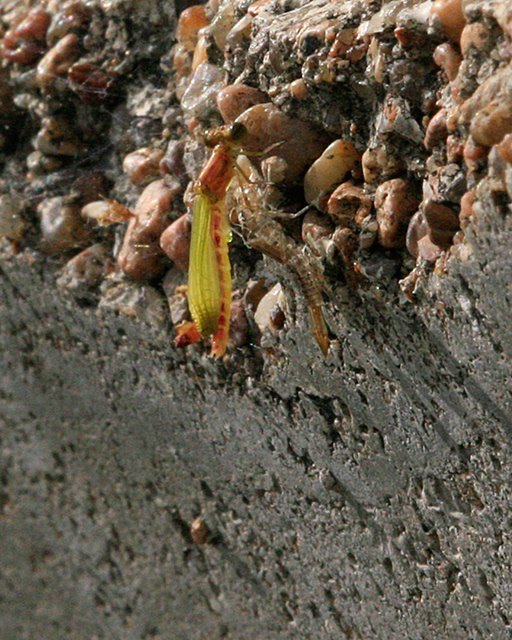
The pictures were taken just a few minutes apart.
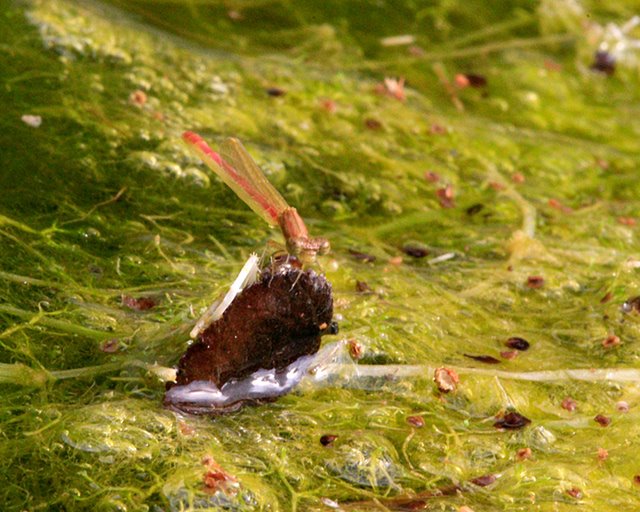
Another recently emerged naiad in the same concrete pond, blowing up his wings.
Wednesday, September 13, 2006
Dragonflies and Damselflies
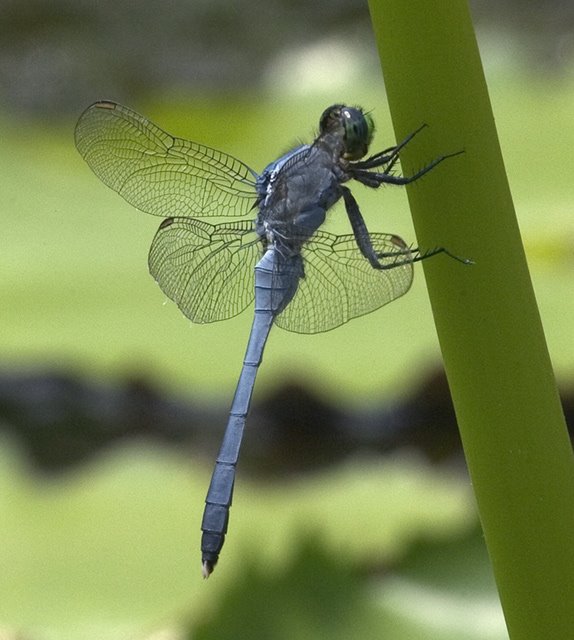
After going to the events at Hornsby Bend a few weeks ago, I decided to look up the classes offered by the Travis County Audubon Society. When I saw the dragonfly identification class, I was very interested. While I have not taken a lot of dragonfly photos, I knew that I needed more skills to identify the ones I had taken. And a simple insect identification book is really pretty useless - SOOOOOOOO many insects! Plus I did not know the first thing about the differences between dragonflies, damselflies, darners, skimmers, etc.
While I learned many things tonight, identifying the first set of my shots -sigh . . . we'll cover those Saturday (I think) At least I know they are males . . . . I did not buy the Dragonflies and Damselflies of Texas book because I wanted to see which dragonfly book I already had. Lesson in frustration to come home and not be able to identify the first one you try . . . .
But back to what I DID learn. Dragonflies are fierce predators. I have only seen them flying around my yard and perched various places. But we got to see a dragonfly larvae catch and eat a small fish! They normally eat mosquitoes and biting flies! (That means we should LIKE them.) There are a few instances of them being able to eat a small hummingbird, but that is rare.
We went over basic physiology and reproduction. And then came the identification. It was WONDERFUL. He went through slide after slide and told us what to look for in each identification (hence why I was so frustrated when I couldn't identify the two I tried tonight-but it will be better when I have the book!)
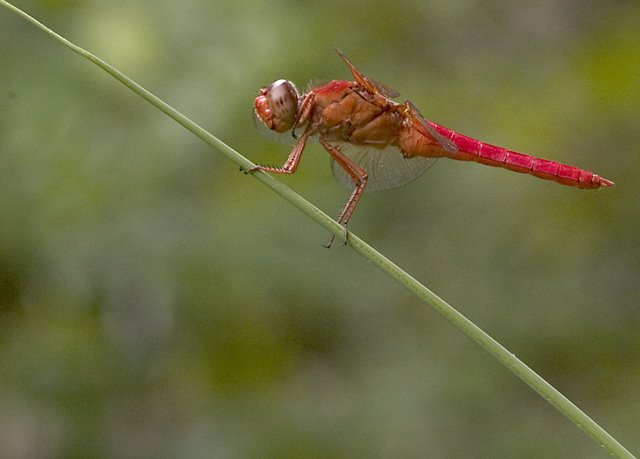
I had gone through and pulled all my dragonfly shots into one area on the computer before the class. I was not too impressed, these were taken a couple of years ago. Most of them I had not worked. But after having seen his shots (and his were great), some of mine are better than I thought.
And the teacher of the class John C. Abbott- the writer of the definitive book on Texas dragonflies, a world expert and a professor at UT whose specialty is dragonflies! What a privilege!
Tuesday, September 12, 2006
Steve Irwin
I have to confess I don't watch many documentaries or wildlife shows (I probably should, there is some great stuff out there.) And I have to confess that I probably have not seen many of Steve Irwin's shows. When I first heard the sad news on Chris Nystrom's blog, I was not sure who this person was. Almost every website I visit has mourned the loss of this extraordinary individual.
As Christians, we know that life is fragile, that death can come at any time. But as humans, we live as though we will live forever. When death takes someone young like Steve, our first thought is that he was robbed of time here on earth. I can't help but think of his family and the young children left fatherless. Being older (and wiser - yeah, right . . . ) I wonder at the foolishness of the risks he took. And yet, he has left such a legacy for his children. He has fostered the love of nature, a sense of adventure, and a loving spirit. Many people who have lived long lives have not experienced even a quarter of what Steve did in his short life. He used his time on earth fully, not only living exhiliarated in God's creation, but sharing that exhiliaration with the rest of the globe.
It is so easy to live a mundane existence, living from paycheck to paycheck, carefully saving for a future that may be cut short. It is easy to fall in a rut driving to and from work only seeing the cars and people around us. While I fret about money issues, I find myself grateful that while my adventures don't come anywhere close to Steve's, we have had opportunity to go out in the RV and have our own adventures. Many of Steve's obituaries talk about how he lived life to the fullest, dying doing what he loved best. I believe that God wants us to enjoy his magnificent creation. People like Steve help all of us experience and appreciate the wonders of our world. In memory of Steve, go out and have an adventure of your own!
I found this posted at one of the websites and thought it worth sharing.
THE CROCODILES ARE CRYING
Endless visions fill my head – this man – as large as life
And instantly my heart mourns for his angels and his wife
Because the way I see Steve Irwin – just put everything aside
It comes back to his family – it comes back to his pride
His animals inclusive – Crikey – light the place with love!
Shine his star with everything he fought to rise above
The crazy-man of Khaki from the day he left the pouch
Living out his dream and in that classic ‘Stevo’ crouch
Exploding forth with character and redefining cheek
It’s one thing to be honoured as a champion unique
It’s one thing to have microphones and spotlight cameras shoved
It’s another to be taken in and genuinely loved
But that was where he had it right – I guess he always knew
From his fathers’ modest reptile park and then Australia Zoo
We cringed at times and shook our heads – but true to natures call
There was something very Irwin in the make up of us all
Yes the more I care to think of it – the more he had it right
If you’re going to make a difference – make it big and make it bright!
Yes - he was a lunatic! Yes - he went head first!
But he made the world feel happy with his energetic burst
A world so large and loyal that it’s hard to comprehend
I doubt we truly count the warmth until life meets an end
To count it now I say a prayer with words of inspiration
May the spotlight shine forever on his dream for conservation
…My daughter broke the news to me – my six year old in tears
It was like she’d just turned old enough to show her honest fears
I tried to make some sense of it but whilst her Dad was trying
His little girl explained it best…she said “The crocodiles are crying”
Their best mate’s up in heaven now – the crocs up there are smiling!
And as sure as flowers, poems and cards and memories are piling
As sure as we’ll continue with the trademarks of his spiel
Of all the tributes worthy – he was rough…but he was real
As sure as ‘Crikey!’ fills the sky
I think we’ll miss ya Steve…goodbye
RUPERT McCALL 2006
Books by Rupert McCall
As Christians, we know that life is fragile, that death can come at any time. But as humans, we live as though we will live forever. When death takes someone young like Steve, our first thought is that he was robbed of time here on earth. I can't help but think of his family and the young children left fatherless. Being older (and wiser - yeah, right . . . ) I wonder at the foolishness of the risks he took. And yet, he has left such a legacy for his children. He has fostered the love of nature, a sense of adventure, and a loving spirit. Many people who have lived long lives have not experienced even a quarter of what Steve did in his short life. He used his time on earth fully, not only living exhiliarated in God's creation, but sharing that exhiliaration with the rest of the globe.
It is so easy to live a mundane existence, living from paycheck to paycheck, carefully saving for a future that may be cut short. It is easy to fall in a rut driving to and from work only seeing the cars and people around us. While I fret about money issues, I find myself grateful that while my adventures don't come anywhere close to Steve's, we have had opportunity to go out in the RV and have our own adventures. Many of Steve's obituaries talk about how he lived life to the fullest, dying doing what he loved best. I believe that God wants us to enjoy his magnificent creation. People like Steve help all of us experience and appreciate the wonders of our world. In memory of Steve, go out and have an adventure of your own!
I found this posted at one of the websites and thought it worth sharing.
THE CROCODILES ARE CRYING
Endless visions fill my head – this man – as large as life
And instantly my heart mourns for his angels and his wife
Because the way I see Steve Irwin – just put everything aside
It comes back to his family – it comes back to his pride
His animals inclusive – Crikey – light the place with love!
Shine his star with everything he fought to rise above
The crazy-man of Khaki from the day he left the pouch
Living out his dream and in that classic ‘Stevo’ crouch
Exploding forth with character and redefining cheek
It’s one thing to be honoured as a champion unique
It’s one thing to have microphones and spotlight cameras shoved
It’s another to be taken in and genuinely loved
But that was where he had it right – I guess he always knew
From his fathers’ modest reptile park and then Australia Zoo
We cringed at times and shook our heads – but true to natures call
There was something very Irwin in the make up of us all
Yes the more I care to think of it – the more he had it right
If you’re going to make a difference – make it big and make it bright!
Yes - he was a lunatic! Yes - he went head first!
But he made the world feel happy with his energetic burst
A world so large and loyal that it’s hard to comprehend
I doubt we truly count the warmth until life meets an end
To count it now I say a prayer with words of inspiration
May the spotlight shine forever on his dream for conservation
…My daughter broke the news to me – my six year old in tears
It was like she’d just turned old enough to show her honest fears
I tried to make some sense of it but whilst her Dad was trying
His little girl explained it best…she said “The crocodiles are crying”
Their best mate’s up in heaven now – the crocs up there are smiling!
And as sure as flowers, poems and cards and memories are piling
As sure as we’ll continue with the trademarks of his spiel
Of all the tributes worthy – he was rough…but he was real
As sure as ‘Crikey!’ fills the sky
I think we’ll miss ya Steve…goodbye
RUPERT McCALL 2006
Books by Rupert McCall
Saturday, September 09, 2006
Bird Indentification - Part 2
I posted a request for habitat information about the bird Fernando posted. Thickets . . . .
Someone else posted an excellent treatise as to what to look for on this bird . . . .
But what I find interesting - and relevant to my other post . . . . I've seen and identified kingbirds in New Mexico and the panhandle of Texas. So when I saw this bird . . . . my first thought was western kingbird - I've seen them before. . . . . And the bird had the pale yellow breast and dark head and feathers. It was familiar. But it is in the details, apparently kingbirds have black tails, not rufous colors.
Back to the spiritual comparisons- often we read passages of scripture and our familiarity can blind us to new truths or sometimes lead us to reject someone else's ideas. As humans we also like being "right."
I kept clinging to my ID as a kingbird, because that bird was familiar to me(and despite the other guys long treatise on why it could not possibly be a KINGBIRD) there were similarities. I can see why I thought the bird was a kingbird . . . . but I can also see at this point why it probably isn't. Even my second guess did not agree with the more experienced birder.
While I've been playing with identifying birds for 25 years, I have not birded as vigorously or as extensively as many birders. Some birds are easy to identify - others more difficult. I think I'll keep the title "Nature Photographer" rather than birder. But even as a nature photographer, I need to be able to accurately identify what I am photographing. So I'll keep on with practicing my birding skills.
Someone else posted an excellent treatise as to what to look for on this bird . . . .
But what I find interesting - and relevant to my other post . . . . I've seen and identified kingbirds in New Mexico and the panhandle of Texas. So when I saw this bird . . . . my first thought was western kingbird - I've seen them before. . . . . And the bird had the pale yellow breast and dark head and feathers. It was familiar. But it is in the details, apparently kingbirds have black tails, not rufous colors.
Back to the spiritual comparisons- often we read passages of scripture and our familiarity can blind us to new truths or sometimes lead us to reject someone else's ideas. As humans we also like being "right."
I kept clinging to my ID as a kingbird, because that bird was familiar to me(and despite the other guys long treatise on why it could not possibly be a KINGBIRD) there were similarities. I can see why I thought the bird was a kingbird . . . . but I can also see at this point why it probably isn't. Even my second guess did not agree with the more experienced birder.
While I've been playing with identifying birds for 25 years, I have not birded as vigorously or as extensively as many birders. Some birds are easy to identify - others more difficult. I think I'll keep the title "Nature Photographer" rather than birder. But even as a nature photographer, I need to be able to accurately identify what I am photographing. So I'll keep on with practicing my birding skills.
Birding and Bird Identification
Being raised in the Church of Christ, I am quite familiar with going back to chapter and verse to prove a point. As a group we have moved from legalism toward grace, and so these arguments occur less.
However, it was interesting this week to watch the birding world's version of legalism:
I joined Texbirds this week. I get email throughout the day as to bird counts, bird sightings and other Texas birding news. I've even posted a couple of birds that I've seen in my yard for identification.
On Wednesday Fernando posted a bird on his website for us to identify. Since I'm familiar with a bird similar to this, I sent him an email saying I thought it was a western kingbird. He was kind of enough to post a tally of the identifications he received:
14 votes for Brown-crested Flycatcher
12 votes for Great-crested Flycatcher
4 votes for Ash-throated Flycatcher
3 votes for Western Flycatcher
I've looked through 3 of my bird identification books since then comparing these birds. (I've got a few more I can use . . . . it has aroused my curiosity - I WOULD like to know which bird this is and why.) If it is truly a crested variety, then its crest is not up . . . . . Many birds you make an id based on where you saw the bird. If I was out in West Texas or New Mexico - flat prairie - it would be a no brainer - Western Kingbird. However, if the shot was taken in a forested or thicket area then it could be the Great-crested Flycatcher.
So even though it is a great bird shot . . . .the birders can't agree on the identification . . . .
Since one of my good friends debates with me on identification of birds we see, I am going to say that I think humans like to debate over small details. And in birds most of the time it HAS to be one species . . . but that does not count the birds that can interbreed and have hybrids making identification MUCH more difficult. It also does not take into consideration that juvenile birds also look different - making identification harder. One set of birds that I posted for identification turned out to be juvenile starlings - they don't look anything like the adult version! I also find that some of the sparrows and finches look so much alike that it is hard for me to tell who is who at my bird feeder. Sometimes I find that I want to know which sparrow I'm looking at. Other times I am content to enjoy the constant coming and going from the feeder. Sometimes life is too short to debate over the small things. (Does that mean I'll never be a "true" birder?)
However, it was interesting this week to watch the birding world's version of legalism:
I joined Texbirds this week. I get email throughout the day as to bird counts, bird sightings and other Texas birding news. I've even posted a couple of birds that I've seen in my yard for identification.
On Wednesday Fernando posted a bird on his website for us to identify. Since I'm familiar with a bird similar to this, I sent him an email saying I thought it was a western kingbird. He was kind of enough to post a tally of the identifications he received:
14 votes for Brown-crested Flycatcher
12 votes for Great-crested Flycatcher
4 votes for Ash-throated Flycatcher
3 votes for Western Flycatcher
I've looked through 3 of my bird identification books since then comparing these birds. (I've got a few more I can use . . . . it has aroused my curiosity - I WOULD like to know which bird this is and why.) If it is truly a crested variety, then its crest is not up . . . . . Many birds you make an id based on where you saw the bird. If I was out in West Texas or New Mexico - flat prairie - it would be a no brainer - Western Kingbird. However, if the shot was taken in a forested or thicket area then it could be the Great-crested Flycatcher.
So even though it is a great bird shot . . . .the birders can't agree on the identification . . . .
Since one of my good friends debates with me on identification of birds we see, I am going to say that I think humans like to debate over small details. And in birds most of the time it HAS to be one species . . . but that does not count the birds that can interbreed and have hybrids making identification MUCH more difficult. It also does not take into consideration that juvenile birds also look different - making identification harder. One set of birds that I posted for identification turned out to be juvenile starlings - they don't look anything like the adult version! I also find that some of the sparrows and finches look so much alike that it is hard for me to tell who is who at my bird feeder. Sometimes I find that I want to know which sparrow I'm looking at. Other times I am content to enjoy the constant coming and going from the feeder. Sometimes life is too short to debate over the small things. (Does that mean I'll never be a "true" birder?)
Thursday, September 07, 2006
The first breath of fall
August is always a hot month in Central Texas. Temperatures over 100 degrees are common. This August was especially hot. Generally the coming of September brings just a hint of cooler weather. This September has been more generous than usual. Yesterday morning and this morning, I awoke to temperatures in the upper 60's. While I sat on the porch most mornings throughout the summer, this cool air is so welcome.
We'll have some more hot weather, but I plan to enjoy these cooler temperatures while they last.
We'll have some more hot weather, but I plan to enjoy these cooler temperatures while they last.
Monday, September 04, 2006
Horses for Writers

At Lone Star Con several years ago, I attended a panel of writers who were also horse people. They talked about all the mistakes writers make when having horses in their novels or short stories. Some of them simple things such as when the calvary marches over barren stone mountain passes, where are the wagons carrying the hay and feed. Another common mistake is having the horse act more like a motor car, pushing over more territory, too fast, without including the necessary rest and recoup time.
My friend, Bettye Baldwin, has just published Horses for Writers dealing with these issues and many more. It covers everything you would want to know about horses. I would recommend it for anyone who loves horses. In some ways it is an anything you want to know about horses, but were afraid to ask book!
Baby Birds

I've had bird feeders out for a number of years now. This year we've been home during the summer. I've kept the feeders going. This past month I've been rewarded by seeing the fledged baby birds coming with their parents to the feeders. Not only are they "cute," but watching the interaction is fun. One of the first babies I noticed was a baby cardinal. The baby was on the ground, fluttering his wings begging his mom for food. I saw this same behavior this past week only with finches. The baby was on a branch, fluttering those wings (trying to look helpless????) with his beak open.

And, of course, mom fed it. However, it was not too long before the baby flew down and started feeding himself from the feeder. Not so "helpless" after all.
Sunday, August 27, 2006
Owl Prowl and Frog Frolic
I signed up for Texbirds recently. I'd heard about it several years when I was birdwatching in the Rio Grande Valley. I signed up because I had an unknown bird that I could not find in my bird books. (I still need to post about that one . . . later) Warning: If you sign up for this list, you will get LOTS of emails. But I have found it interesting to hear about bird sightings all over the state.
One of the posts that caught my attention: Hornsby Bend Partnership Celebration. I'd been reading about the Hawkwatch that was counting the migrating hawks at Hornsby Bend. It was a multi hour event, but the big drawing factor for me was the Owl Prowl.
I went last night . . . . We walked for about 2 hours. We heard a brief owl calling early on as well as some frogs. One of our guides was excellent at simulating owl calls, but they went unanswered. But it was beginning to look as though we weren't going to get to hear the owls. And then as we neared the end of the walk, it came: Whoooo Whooooo Who Who Who Whoooooo!!! (Ya gotta get the rhythm right here!) And then an answering Whoooo Whoooooo Who Who Who Whoooooo!!!! The pair called back and forth, and at one point called at the same time! They were close . . . . While we did not see them, it was well worth the time spent tromping around near the Colorado River in the dark.
One of the posts that caught my attention: Hornsby Bend Partnership Celebration. I'd been reading about the Hawkwatch that was counting the migrating hawks at Hornsby Bend. It was a multi hour event, but the big drawing factor for me was the Owl Prowl.
I went last night . . . . We walked for about 2 hours. We heard a brief owl calling early on as well as some frogs. One of our guides was excellent at simulating owl calls, but they went unanswered. But it was beginning to look as though we weren't going to get to hear the owls. And then as we neared the end of the walk, it came: Whoooo Whooooo Who Who Who Whoooooo!!! (Ya gotta get the rhythm right here!) And then an answering Whoooo Whoooooo Who Who Who Whoooooo!!!! The pair called back and forth, and at one point called at the same time! They were close . . . . While we did not see them, it was well worth the time spent tromping around near the Colorado River in the dark.
Tuesday, August 01, 2006
Subscribe to:
Posts (Atom)